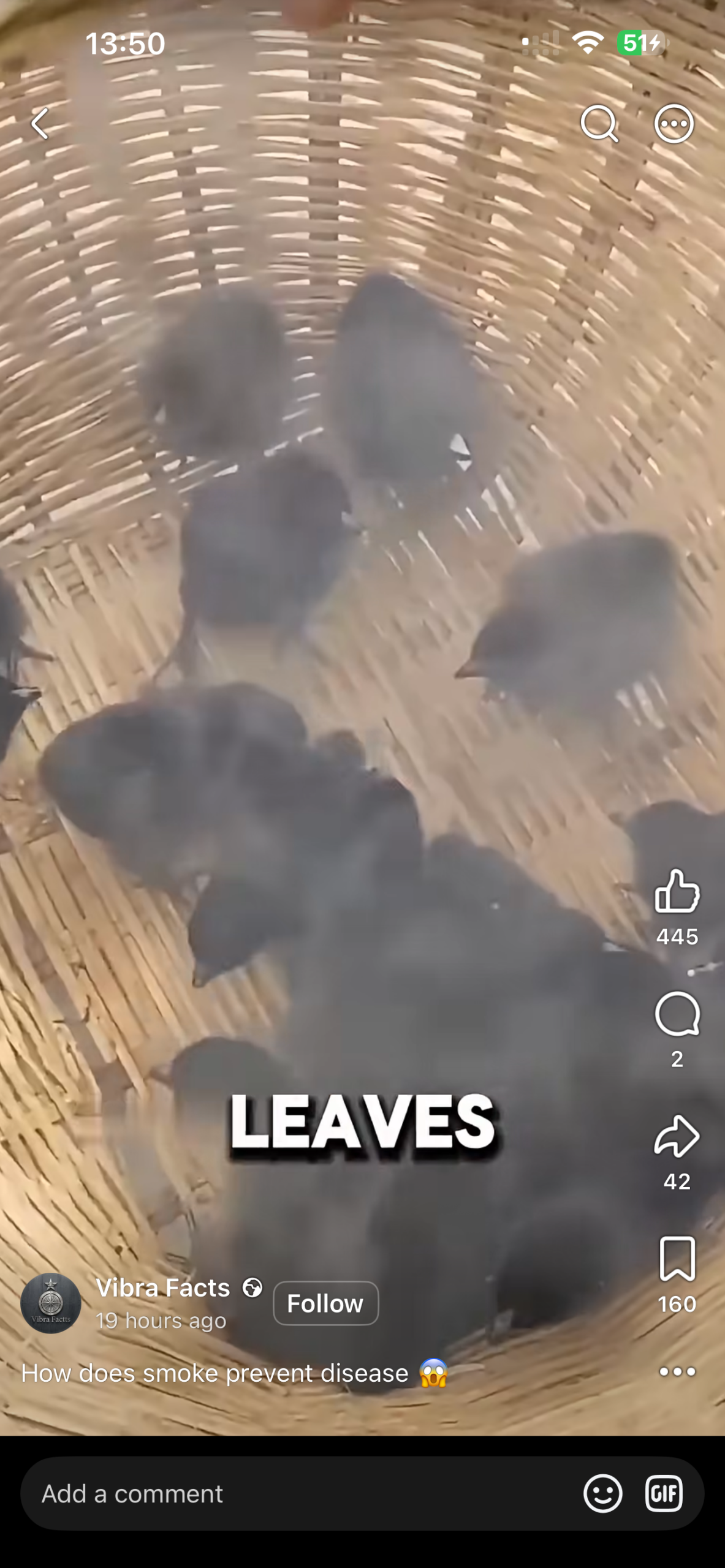
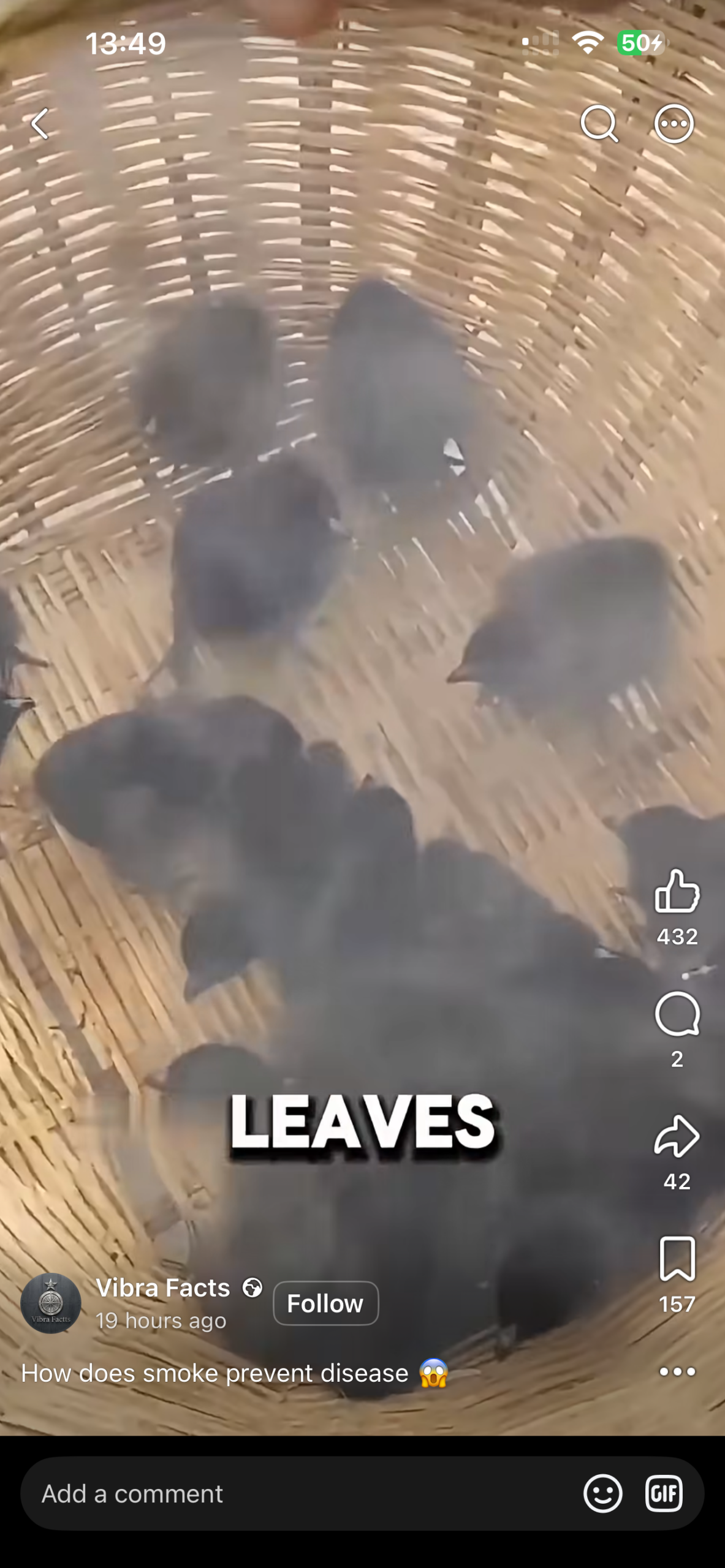
A basket of chicks hangs over smouldering neem leaves. Smoke rises through the birds. The claim is striking: the smoke prevents infections, disease and insects, reducing the need for medicines.
It looks ingenious. It also looks alarming. Rather than laughing at traditional practice or copying a viral video uncritically, there is a better response: ask what part of the idea is biologically plausible, what the evidence actually shows, and what we can safely test.
Neem is not folklore pretending to be science
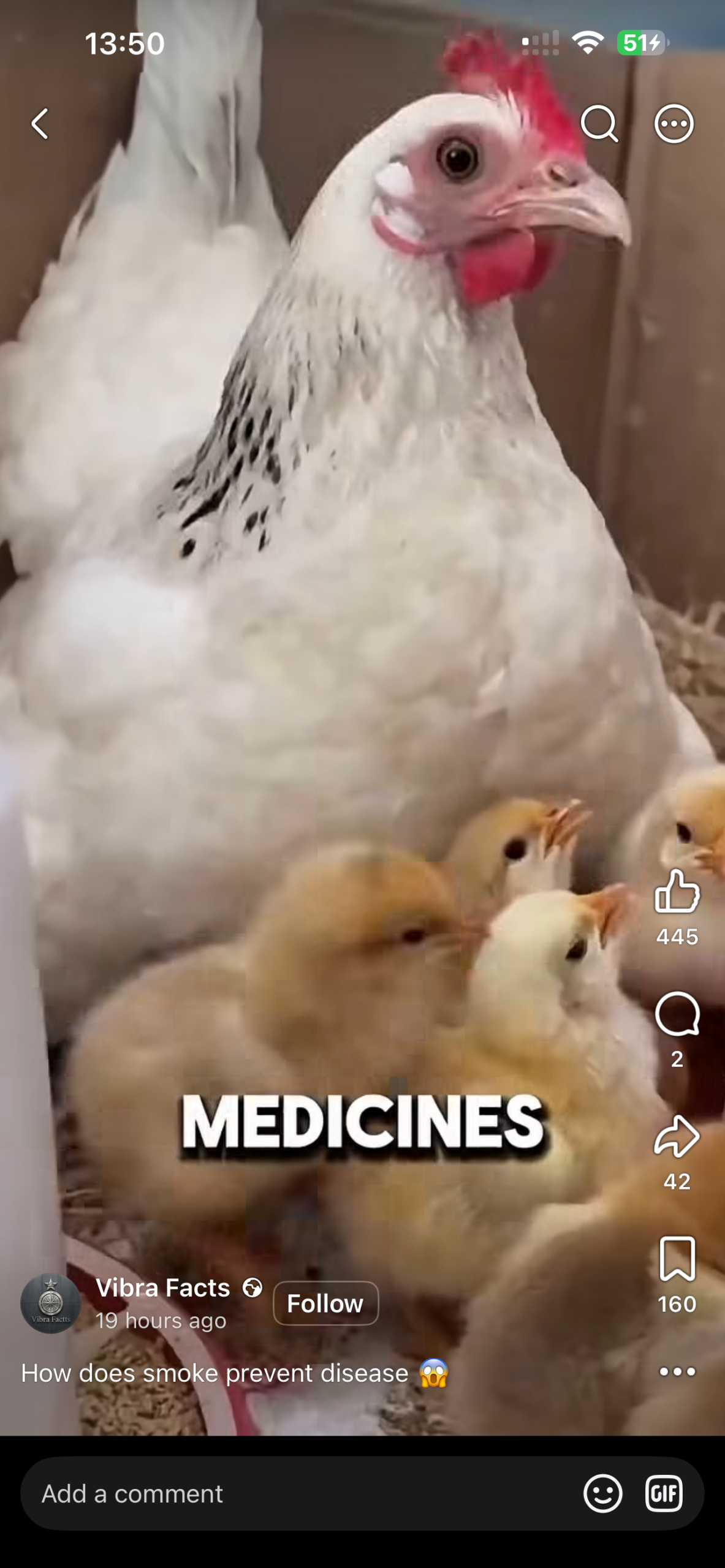
Neem (Azadirachta indica) contains biologically active compounds and has a serious research literature behind it. Laboratory research has found neem leaf extract bactericidal against multidrug-resistant poultry pathogens. There is also field evidence for neem-derived preparations against poultry red mites.
But neem evidence is not neem-smoke evidence
Evidence that a neem extract, neem oil or formulated neem product has antibacterial or acaricidal activity does not prove that smoke from burning neem leaves is a safe or effective preventive treatment for chicks.
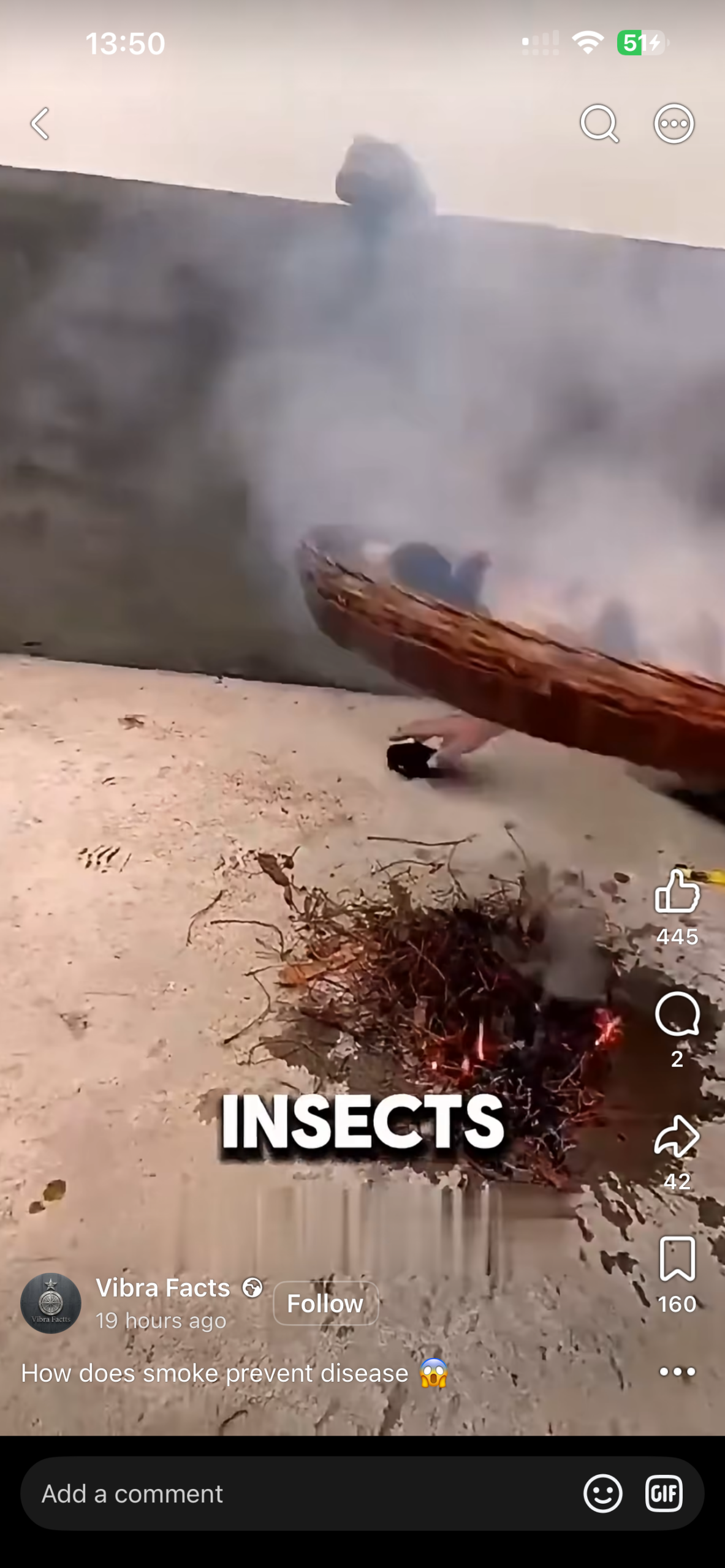
The viral demonstration puts young birds in visibly dense smoke. Combustion produces fine particles and gases as well as any volatile plant compounds. Poultry respiratory systems are sensitive to airborne contaminants.
The paradox is obvious: a farmer could injure the respiratory system while trying to protect the bird from respiratory disease.
What might traditional farmers actually have discovered?
We should not dismiss the observation simply because the mechanism has not been demonstrated. Neem-derived products have documented activity against poultry mites. A 2018 commercial-farm study of a formulated neem oil treatment reported mite reductions of 94.65%, 99.64% and 99.80% after successive administrations. Earlier field research with a neem seed extract also reported substantial mite reductions.
But environmental pest control and deliberately forcing chicks to inhale smoke are very different interventions.
What Excell Africa Farms should test
We currently have young chicks at both our Wasimi, Nigeria and Mondouku, Côte d’Ivoire farms. That creates an opportunity to turn an internet claim into structured farm learning — but our first pilot should not reproduce the dense-smoke basket treatment.
A safer first-stage pilot is observational and environmental. At each farm we can establish comparable pens, record baseline insect and mite presence, chick weight, mortality, feed and water consumption, litter condition and any respiratory signs. We can investigate neem-based environmental pest-management methods that do not expose occupied pens to combustion smoke. We should photograph the housing, record temperature and ventilation, count visible insects or mites consistently, weigh sample birds at fixed intervals and document every intervention.
What we will not do
We will not deliberately infect birds. We will not withhold necessary vaccination or veterinary treatment. We will not expose two-week-old chicks to dense smoke simply to see whether they survive it. And we will not interpret a small farm pilot as proof that neem prevents or cures poultry disease.
From viral video to institutional knowledge
This is where farming becomes more than production. Someone sees an intriguing practice. We ask a question. We research what is already known. We design a responsible test. We measure what happens. We record failures as carefully as successes. Then we publish what we learned.
See it → question it → research it → test it → document it → teach it.
If Anthony remembers that neem appeared to reduce insects, Anthony possesses an observation. If the two farms test a defined method, preserve the measurements and document what happened, Excell begins to possess knowledge. If somebody can retrieve that record years later when making a poultry-health decision, Excell remembers.
We’re putting the question to the test
Excell Africa Farms has two-week-old chicks at both Wasimi and Mondouku. Rather than simply repeating what we saw online, we are beginning a controlled farm investigation into neem and poultry health.
Follow the experiment on JustLearn. We’ll document what we try, what we measure, what works, what doesn’t — and what we learn. For related farm learning, read our Pekin duck farming guide and our documented yam-vine rooting trial.
Have you used neem with chickens or other livestock? Share your experience with us. Your observation may give us the next question worth testing.
Research referenced
- Neem leaf extract against multidrug-resistant poultry pathogens — Veterinary Medicine and Science (2021).
- Neem oil formulation against poultry red mite — Medical and Veterinary Entomology (2018).
- Neem seed extract against red mites in naturally infected poultry — Parasitology Research (2008).
- Contact and fumigant toxicity of a neem product against poultry red mites — Parasitology Research (2010).
- Particulate matter and poultry respiratory health — Poultry Science (2023).
Farm note: This article discusses an experimental idea, not a substitute for veterinary diagnosis, vaccination, biosecurity or treatment. Excell Africa Farms will prioritise animal welfare and controlled observation in any pilot.
Image credit: Screenshots in this article are taken from a social-media video shared by Vibra Facts on Facebook and are reproduced for commentary, analysis and educational discussion. Copyright remains with the respective original creator/rightsholder.