We saw shrimp being raised in tanks and asked a practical question: could Excell Africa Farms begin a small aquaculture trial using infrastructure already on the farm—without first excavating a pond?
That is the JustLearn method: see an idea, question it, test it against local conditions, and turn it into something we can build. The short answer is yes: shrimp or freshwater prawns can be grown in managed tanks. The honest answer is that the species, water chemistry, aeration, seed quality and operator discipline matter far more than the attractive tanks shown in a social-media video.
Tank farming changes the starting point
A conventional shrimp venture may begin with land clearing, pond excavation, water-control structures, pumping and electrical work. A tank pilot shifts the emphasis. Instead of buying more land, a farmer invests in manageable water volumes, aeration, filtration, plumbing, testing and backup power.
For Excell Africa Farms, this matters because we are not starting from zero. The farm already has land, borehole water, solar power with backup generation, staff, security, practical livestock experience and tanks that can inform the design. Some tanks have also been considered for Azolla and rainwater storage. Existing infrastructure does not make shrimp farming free, but it can remove several costs that defeat a new entrant before the first animal is stocked.
The important correction: a tank is not a complete production system. Without dependable aeration, water-quality control and a rehearsed power-failure response, it is simply a container of risk.
Shrimp or freshwater prawn?
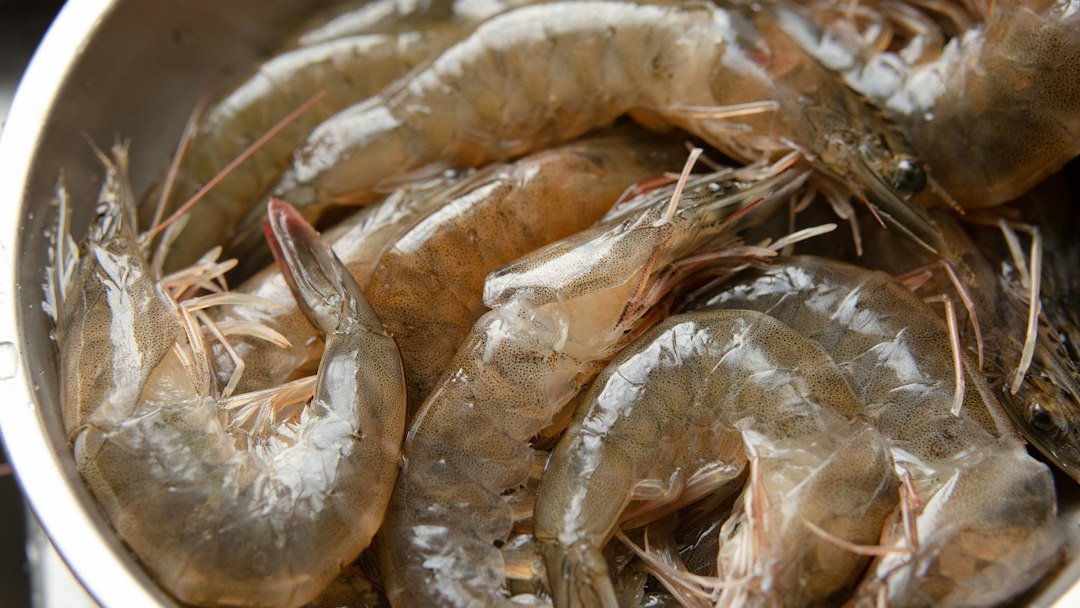
“Shrimp farming” can describe very different animals and systems. Pacific whiteleg shrimp (Litopenaeus vannamei) are widely farmed and tolerate a broad salinity range, including low-salinity inland production under controlled conditions. Giant freshwater prawns (Macrobrachium rosenbergii) spend their grow-out period in freshwater and may fit an inland Ogun State farm more naturally.
However, “freshwater” does not mean freshwater at every life stage. The Food and Agriculture Organization explains that giant freshwater prawn larvae require brackish water before becoming post-larvae suitable for freshwater nursery and grow-out. That means an inland farm can buy post-larvae from a competent hatchery and grow them in freshwater, while a future hatchery would need a controlled source of brackish water or properly prepared artificial seawater.
This is why the first Excell Africa pilot should begin with grow-out, not hatchery production. We should first learn to receive, acclimatise, feed, grade, monitor and harvest healthy stock. Broodstock and hatchery ambitions can come later, after the farm has reliable production records.
What a sensible Excell Africa pilot looks like
Stage 1 — nursery: receive a modest batch of verified post-larvae or juveniles, quarantine where appropriate, acclimatise them carefully and observe survival before committing the full system.
Stage 2 — grow-out tanks: use several circular tanks rather than one large tank. Separate tanks allow comparison, grading and isolation if one unit develops a problem.
Stage 3 — continuous aeration: size the blower, diffusers, pipes and emergency backup for the biological load. Shrimp and prawns cannot wait for someone to start a generator after oxygen has already collapsed.
Stage 4 — water management: test temperature, dissolved oxygen, pH, ammonia, nitrite, alkalinity and salinity where relevant. Record readings at consistent times. A clear tank can still contain dangerous water.
Stage 5 — harvest and learning: measure survival, feed conversion, growth variation, labour, electricity, water use, selling price and losses. The first crop should purchase knowledge before it is expected to produce maximum profit.
What will it cost?
Our preliminary planning discussion placed a small demonstration system in the region of ₦3 million to ₦4 million where major farm infrastructure is already available. That is a working design allowance—not a supplier quotation and not a promise of profitability. The final figure must follow a site survey, tank specification, electrical load calculation, plumbing plan and written Nigerian quotations.
The cost headings are clearer than any premature total: tanks; air blower and diffusers; pumps and plumbing; mechanical and biological filtration; water-testing equipment; post-larvae or juveniles; feed; transport; skilled support; and contingency. Feed, power reliability and survival rate will usually matter more to the first-cycle result than finding the cheapest seed.
Price verification rule: we are not publishing the earlier estimate of ₦15–₦30 per post-larva as established Nigerian pricing. Before purchase, Excell Africa Farms needs written quotations naming the species, life stage, quantity, health status, transport method, expected arrival time and replacement policy.
What social-media videos often leave out
The tank is the most visible component, but it is not the enterprise. Videos rarely show failed aerators, ammonia spikes, weak seed, cannibalism, grading labour, transport mortality, feed storage, biosecurity, rejected harvests or the difference between gross sales and profit.
They also tend to present stocking density as a shortcut to income. High density is a demand for tighter control. More animals in the same water mean faster oxygen consumption, more waste, greater sensitivity to power interruption and less room for operator error.
Why the pilot is bigger than shrimp
At Excell Africa Farms, the stronger opportunity is an Excell Aqua Centre: a connected learning area for freshwater prawns, catfish, tilapia, Azolla, water reuse, solar-powered pumping and aquaponic trials. Each tank can answer a practical question, and each production cycle can create farm data, training material and better decisions.
That creates several possible income streams over time: fresh or chilled produce, farm visits, masterclasses, system-design support, equipment partnerships and documented case studies. None should be sold as proven until the pilot supplies evidence.
From JustLearn to JustDo
We are investigating a small-scale tank-based freshwater prawn or shrimp trial at Excell Africa Farms in Wasinmi, Ogun State. We will not simply repeat what we see online. We intend to verify the species and supplier, design the system around reliable oxygen and water quality, document the true Nigerian costs, record what works and what fails, and publish the results as a living case study.
See it. Question it. Test it. Learn it. Build it.
Sources and further reading
Technical grounding: FAO, Farming Freshwater Prawns: A Manual for the Culture of Macrobrachium rosenbergii; FAO cultured-species profile: Giant river prawn; and FAO comparison of farmed shrimp species and salinity considerations.