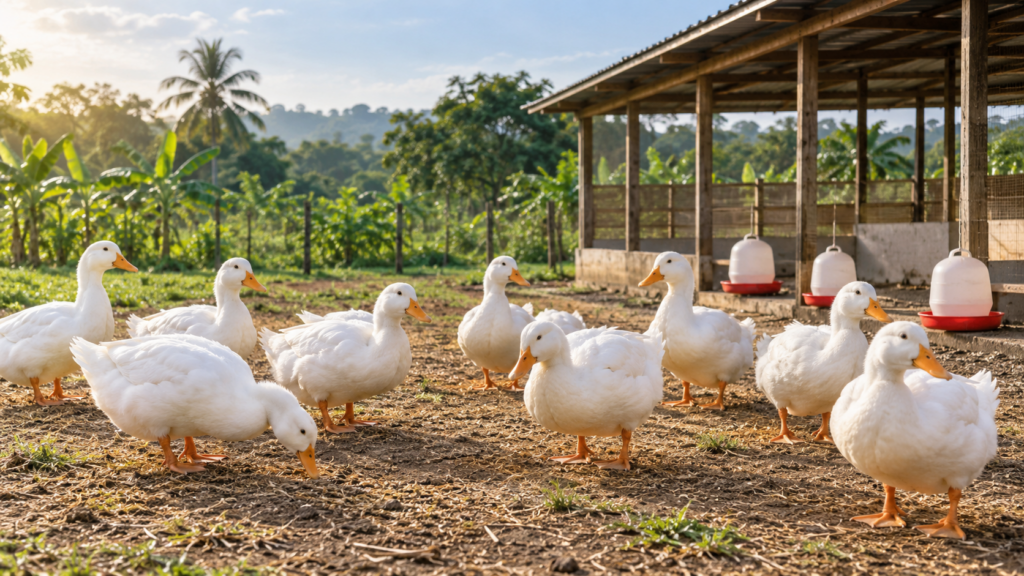
Duck farming remains one of Africa’s most overlooked livestock opportunities. While chicken production attracts most poultry investment, demand for duck meat and eggs is developing among restaurants, hotels, supermarkets, expatriate communities and households seeking alternatives to conventional poultry. For farmers able to identify these customers, Pekin ducks offer a particularly promising commercial option.
For a field-based comparison with a different duck species, see what we are learning from the Muscovy flock at our Mondouku farm.
The Pekin is a fast-growing domestic duck breed developed primarily for meat production. With appropriate feeding and management, Pekins can reach market weight in approximately seven to nine weeks. They are generally hardy, manageable and capable of supplementing their diet by foraging for insects, snails, vegetation and spilled grain. These characteristics make them suitable for small farms, mixed agricultural enterprises and larger commercial operations.
Nevertheless, profitable Pekin duck farming requires more than purchasing ducklings and providing a container of water. Ducks consume substantial quantities of feed, spill water easily and can rapidly turn poorly designed housing into wet, unhealthy surroundings. Farmers must therefore understand brooding, nutrition, drainage, biosecurity, predator protection and market planning before expanding production.
This guide explains how to establish a practical Pekin duck farming business under African conditions. It covers breed selection, housing, feeding, health management, production costs and marketing. The objective is not merely to raise ducks, but to build an evidence-led enterprise in which every bird, expense and sale is properly recorded—and every production cycle improves upon the last.
For Excell Africa Farms, this model reflects the journey “From Soil to Significance”: using the farm as a working laboratory, turning practical experience into food and income, and transforming what is learned into training for Africa’s next generation of agricultural entrepreneurs.
1. Why Pekin Ducks Are Suitable for Commercial Farming
Pekin ducks are among the most widely used commercial meat ducks in the world. Their rapid growth, substantial body size and relatively mild-tasting meat make them a strong choice for farmers seeking an alternative to conventional chicken production. Under suitable management, Pekins can reach a live weight of approximately 2.5 to 3.5 kilograms within seven to nine weeks, although results vary according to genetics, feed quality, health and environmental conditions.
This short production cycle enables a farmer to raise several batches annually. However, fast growth alone does not guarantee profit. Commercial success depends on controlling feed costs, mortality and water-related waste while securing customers willing to pay an appropriate price.
Pekins are generally calm and easier to manage than many lighter or more nervous duck breeds. They can be raised in purpose-built duck houses or suitably adapted poultry buildings, provided there is adequate ventilation, dry bedding and effective drainage. They do not need a pond, although they must always have clean drinking water deep enough to immerse their bills and clean their nostrils and eyes.
Their adaptability is particularly useful in African mixed-farming systems. Pekins can forage for insects, snails, tender vegetation and spilled grain. On an integrated farm, they may help reduce certain pests while producing manure that can be composted for crop production. Nevertheless, scavenging should not replace balanced feed when birds are being raised for predictable commercial growth.
Pekin ducks are primarily meat birds, but females can also produce a useful number of eggs. Egg production depends heavily on strain, nutrition, lighting and management. Farmers intending to breed their own replacement stock will normally require an incubator because commercial Pekins are not consistently broody and may not reliably hatch their eggs.
Another commercial advantage is the Pekin’s white plumage. White feathers generally leave fewer visibly dark pinfeathers after processing, creating a cleaner-looking carcass for retail and hospitality customers. The breed’s meat is also suitable for restaurants, hotels, supermarkets, specialist food retailers and direct household sales.
The greatest challenge may not be production but demand. Duck meat is less routinely purchased than chicken in many African markets. Farmers should therefore identify potential customers before introducing a large flock. Discussions with chefs, hotels, Chinese restaurants, supermarkets and premium household buyers can establish preferred bird sizes, quantities, delivery frequency and acceptable prices.
For Excell Africa Farms, the prudent approach would be a controlled pilot of approximately 20–30 Pekin ducklings. Each bird should be weighed regularly, and all feed, medication, mortality, labour and sales should be recorded. The pilot would reveal the real production cost under local conditions while generating photographs, videos and practical evidence for future training. That turns a small flock into three connected assets: food production, a tested business model and original JustLearn articles.
2. Housing, Water and Environmental Management
Successful Pekin duck farming begins with a dry, secure and well-ventilated environment. Ducks are naturally associated with water, but their sleeping and feeding areas should not remain wet. Constantly damp housing encourages odour, flies, respiratory problems, foot infections and the growth of harmful organisms. Good drainage is therefore one of the most important investments in a commercial duck unit.
The house should be constructed on elevated, well-drained ground that is not vulnerable to flooding. Its orientation should encourage natural airflow while limiting direct exposure to intense afternoon heat and driving rain. In the hot conditions of southwestern Nigeria, an open-sided structure with secure wire mesh, a rainproof roof and generous overhangs can provide ventilation and shade. Curtains may be added to protect young ducklings during storms or unusually cold nights.
Concrete flooring is durable and easy to disinfect, but it must not be smooth or slippery. A roughened surface covered with dry wood shavings, chopped straw, rice husks or another safe absorbent material will provide better footing. Wet bedding should be removed promptly and replaced rather than covered repeatedly until a thick, contaminated layer develops.
Stocking density must account for the birds’ rapid growth. Ducklings may appear to occupy very little space during their first week, but overcrowding quickly becomes a problem. As the birds mature, each Pekin should generally have approximately 0.25–0.35 square metres of indoor floor space, with additional outdoor exercise space where available. Exact requirements will depend on climate, housing design, ventilation and final market weight.
Water management separates a clean duck enterprise from a muddy one. Pekins do not require a pond. They do, however, need continuous access to clean drinking water that allows them to immerse their bills and rinse their eyes and nostrils. The water should be positioned so that splashing does not soak the sleeping area.
Drinkers can be placed over a concrete or mesh-covered drainage channel that carries wastewater away from the house. Gravel soakaways, planted filtration areas or safely managed collection systems can help prevent pools of stagnant water. Drinkers should be cleaned daily because ducks frequently transfer feed and dirt into them.
Small bathing tubs may be offered in a separate, drained outdoor area. The water must be changed regularly. An unmanaged pond can become contaminated with manure and parasites, so it should not be introduced simply because ducks are expected to swim.
Housing must also protect the flock from predators and theft. Strong mesh, secure doors and buried or reinforced lower barriers can deter dogs, snakes and rodents. Ducklings require particularly careful protection from rats and other small predators. At Excell Africa Farms, secure night housing should be integrated with the existing camera system, staff checks and livestock-security procedures.
Young ducklings need a warm brooding area before they can regulate their body temperature effectively. Their behaviour is a useful guide: ducklings clustering beneath the heat source may be cold, while those moving far away and panting may be overheated. Temperature should be reduced gradually as feathers develop.
A well-designed Pekin unit does not attempt to eliminate water from the birds’ lives. Instead, it controls where the water goes. The essential formula is simple: clean water for the ducks, dry bedding for resting, effective drainage for the farm and secure housing for the night.
3. Feeding Pekin Ducks from Duckling to Market
Feed is usually the largest expense in commercial Pekin duck production. A profitable enterprise must therefore provide enough nutrition for rapid, healthy growth while limiting spillage, spoilage and unnecessary consumption. Reducing feed quality to save money can be a false economy: poorly nourished ducks grow slowly, remain on the farm longer and may ultimately consume more feed before reaching market weight.
During the first two to three weeks, Pekin ducklings require a high-quality starter ration formulated for waterfowl. Where specialist duck feed is unavailable, a suitable non-medicated chick starter may be used under professional guidance. Some poultry feeds contain medications that are not approved or appropriate for ducks, so farmers should never assume that every chicken ration is safe.
Niacin, or vitamin B3, is especially important. Ducklings require more niacin than chickens, and a deficiency can contribute to weak legs, enlarged joints, poor growth and difficulty walking. Any proposed feed or supplement should be discussed with a poultry nutritionist or veterinarian rather than added by guesswork.
After the starter phase, birds can move gradually onto a balanced grower ration. Sudden feed changes may reduce consumption or cause digestive problems, so the old and new feeds should be mixed over several days. Ducks being raised for meat normally remain on an appropriate grower or finishing programme until sale.
Feed should generally be available consistently during the rapid-growth period. Pekins should never receive dry feed without nearby drinking water because they use water to swallow and clear their bills. Drinkers should be close enough for easy access but arranged so that splashing does not soak the feed or bedding.
Pelleted feed is often preferable to finely ground mash. Ducks may waste powdery feed or mix it with water, creating a wet paste that quickly spoils. Feeders should be positioned at a suitable height and filled only enough to reduce scattering. Their design should allow all birds reasonable access without permitting them to stand inside and contaminate the ration.
Foraging can reduce boredom and contribute useful nutrients. Pekins may consume insects, snails, tender vegetation and fallen grain. Suitable farm materials and crops may also supplement the ration where their nutritional value and safety are understood. However, cassava products must be properly processed, and mouldy maize, spoiled food, chemically contaminated vegetation and salty household waste should never be fed.
Clean drinking water must be available throughout the day, especially during hot weather. Containers should be emptied, scrubbed and refilled regularly. Water consumption should also be monitored: a sudden reduction can indicate illness, heat stress, contamination or equipment failure.
At Excell Africa Farms, feed performance should be measured rather than estimated. The pilot flock records should include:
- The quantity and cost of feed purchased
- Feed issued to each group daily
- Weekly sample weights
- Deaths, illness and rejected birds
- Feed remaining at market age
- The total live or processed weight sold
These figures make it possible to calculate the feed conversion ratio—the amount of feed consumed for each kilogram of body weight gained. The results will reveal whether Pekin production is commercially viable under the farm’s actual conditions.
The objective is not simply to produce large ducks. It is to produce healthy, market-ready ducks at a recorded cost that leaves a worthwhile margin after feed, ducklings, labour, housing, water, health care, processing and losses are considered.
4. Health, Breeding and Daily Farm Management
Profitable Pekin duck production depends on preventing problems before they affect the flock. Ducks are generally hardy, but poor hygiene, contaminated water, overcrowding, wet bedding and inadequate nutrition can quickly cause illness, mortality and financial loss.
New ducklings should come from a reputable hatchery or breeder that can provide accurate information about the birds’ age, strain and health history. Weak, injured or visibly unwell ducklings should be identified immediately. Any new birds introduced later should be quarantined before joining the existing flock.
The brooding area must be warm, dry and protected from draughts. Ducklings should be observed rather than managed by temperature readings alone. Birds crowding directly beneath the heat source may be cold, while birds moving away from it, panting or spreading out at the edges may be too hot. A comfortable flock is generally active and evenly distributed throughout the brooder.
Ducks create wet conditions rapidly. Water containers should allow ducklings to immerse their bills but prevent them from climbing inside and becoming chilled. Drinkers can be placed over a mesh-covered drainage platform or another safe system that captures spilled water. Wet litter should be removed promptly and replaced with clean, absorbent bedding.
Daily observation is one of the farmer’s most valuable health tools. Warning signs include:
- Reduced eating or drinking
- Weakness, isolation or unusual quietness
- Coughing, sneezing or difficult breathing
- Diarrhoea or abnormal droppings
- Swollen joints, lameness or inability to stand
- Twisted necks, poor coordination or tremors
- Sudden reduction in growth or egg production
- Unexplained deaths
Sick birds should be isolated promptly and examined by a qualified veterinarian or experienced poultry professional. Medication should not be administered simply because it worked for chickens or during a previous outbreak. Incorrect antibiotics waste money, may delay the correct diagnosis and contribute to antimicrobial resistance. Applicable withdrawal periods must be observed before meat or eggs are sold.
Biosecurity should include controlled entry to the duck area, dedicated footwear, regular equipment cleaning and restrictions on contact with wild birds. Feed must be protected from rats, moisture and mould. Dead birds should be removed immediately and disposed of safely in accordance with local veterinary and environmental requirements.
Predator protection is equally important. Ducklings are vulnerable to rats, snakes, cats and birds of prey, while adult ducks may be attacked by dogs or stolen. Housing should be inspected for gaps, weak doors and damaged wire. A secure night enclosure is essential, even where the ducks forage during the day.
Farmers intending to breed Pekins must maintain healthy males and females in an appropriate ratio. Overmating can injure females, while too few males may reduce fertility. Because Pekins are not consistently broody, eggs are normally collected frequently, stored correctly and placed in a suitable incubator. Incubation requires control of temperature, humidity, egg turning and ventilation; guessing at these conditions can lead to poor hatch rates.
Every flock should have a written daily record covering feed, water, health observations, treatments, deaths, egg production and environmental problems. At Excell Africa Farms, these records would form the evidence behind future commercial decisions and Sharper Minds Academy training.
A healthy duck unit is not one that treats illness successfully. It is one designed to make illness, injury, waste and unexplained loss increasingly uncommon.
5. Costs, Marketing and Building a Profitable Duck Enterprise
A successful Pekin duck enterprise begins with the market, not the ducklings. Before buying birds, the farmer should determine who will purchase them, what form they prefer and how much they are willing to pay. Raising ducks successfully without securing customers merely replaces a production problem with a sales problem.
Potential customers include hotels, restaurants, Chinese and other Asian food businesses, supermarkets, caterers, specialist meat retailers and higher-income households. Farmers should ask prospective buyers whether they want live birds, whole processed carcasses, specific weights or regular deliveries. Processing and selling dressed birds may generate a higher price, but this introduces food-hygiene, refrigeration, packaging, transport and regulatory responsibilities.
The first production cycle should be treated as a commercial experiment. For Excell Africa Farms, a pilot flock of 20–30 Pekin ducklings would be large enough to generate meaningful information without exposing the farm to excessive risk. The pilot should test local feed availability, growth performance, mortality, labour requirements and customer demand.
Startup expenditure may include:
- Ducklings
- Brooder and heating equipment
- Housing construction or adaptation
- Feeders and drinkers
- Drainage and water-storage facilities
- Starter, grower and finishing feed
- Bedding materials
- Veterinary care and biosecurity supplies
- Security and predator protection
- Processing, packaging and cold storage
- Marketing and delivery
Feed will probably represent the largest recurring expense. Every bag purchased should be recorded, together with transport and storage costs. Labour must also be recognised even when the work is performed by the farmer or existing farm employees. Ignoring labour can make an unprofitable operation appear successful.
The true cost per marketable duck can be calculated as:
Total production cost ÷ number of ducks available for sale
Total production cost should include the cost of birds, feed, labour, bedding, water, electricity, veterinary inputs, transport, processing and an appropriate share of housing and equipment costs. The calculation must use the number actually sold—not the number initially purchased—because mortality and rejected birds increase the cost of every surviving duck.
For example, if 30 ducklings are purchased but only 27 reach market, the entire flock cost must be recovered from those 27 birds. The selling price should then include an adequate margin for profit, unexpected losses and reinvestment.
Marketing should begin before slaughter. Photographs and short videos can document the birds’ growth, housing, feeding and welfare. Customers can reserve birds and specify their preferred collection or delivery dates. Pre-orders reduce uncertainty and help the farm avoid keeping market-ready ducks beyond the optimum selling age, when additional feed may produce diminishing financial returns.
The farm should avoid competing with chicken solely on price. Pekin duck can be positioned as a distinctive, farm-raised product for special meals, hospitality businesses and customers seeking premium poultry. Trust can be built through transparent production records, consistent weights, hygienic processing and dependable delivery.
The pilot also creates educational and promotional value. Weekly weights, feed records, setbacks and eventual sales can become photographs, articles, videos and a practical Sharper Minds Academy masterclass. This allows one production cycle to generate meat, business evidence, marketing material and educational content.
Expansion should occur only after the records show repeatable demand and a satisfactory margin. If 30 birds can be produced and sold profitably, the farm might move to 50 or 100 while preserving the same standards. If the pilot performs poorly, the records should reveal whether the problem was breed quality, feed costs, mortality, management or market pricing.
The objective is not to own the largest duck flock. It is to build a measured enterprise in which every batch produces better information, stronger customers and more reliable profit.
Conclusion
Pekin duck farming offers African farmers a practical opportunity to diversify beyond conventional poultry. The breed grows quickly, produces a substantial meat carcass and can perform well within an integrated farming system. However, its commercial potential depends on disciplined management rather than breed characteristics alone.
Housing must remain secure, ventilated and dry. Water must be continuously available but carefully controlled through appropriate drinkers and drainage. Balanced feeding—particularly adequate niacin during early growth—is essential for healthy development. Biosecurity, daily observation and accurate records help prevent small problems from becoming expensive losses.
Most importantly, production must be connected to a verified market. Farmers should speak with hotels, restaurants, retailers, caterers and household buyers before committing to a large flock. A small pilot provides an opportunity to calculate genuine production costs, test demand and improve management without taking unnecessary financial risks.
For Excell Africa Farms, beginning with 20–30 Pekin ducklings would provide more than a new livestock project. It would create a working agricultural experiment from which the farm could produce premium meat, generate original educational material and develop an evidence-based Sharper Minds Academy duck-farming programme.
That is the larger opportunity: not simply raising ducks, but transforming practical farm experience into food, knowledge, employment and a repeatable African enterprise—From Soil to Significance.
Build practical poultry-enterprise knowledge
JustLearn documents the evidence from Excell Africa Farms. Sharper Minds Academy turns tested farm experience into structured learning for farmers and agricultural entrepreneurs.