A practical farm trial in Wasinmi shows that tiny, single-node yam vine cuttings can establish roots—opening the door to a larger, carefully measured propagation experiment.
On 10 August 2026, we planted a collection of remarkably small yam vine cuttings at Excell Africa Farms in Wasinmi, Ogun State. Each cutting consisted of a leaf, its stalk and a short section of vine containing a node.
They did not look like conventional yam planting material. There was no seed yam, no tuber sett and no substantial length of vine—just a living leaf connected to a tiny piece of stem.
Thirty-one days later, on 10 September, we carefully lifted several cuttings. The result was unmistakable: multiple specimens had developed healthy roots from the node area beneath the soil.
This does not yet prove that every rooted cutting will mature into a productive yam plant. It does, however, establish the first important fact in our farm trial: the single-node vine cuttings survived and formed roots.
Why we tried this
Yam is usually established using whole seed yams, tuber pieces or minisetts. These methods work, but planting material can consume a significant part of the previous harvest and can be costly when a farmer wants to expand production.
Vegetative propagation from vine cuttings is not a new scientific idea. Yam researchers have worked with nodal vine material, and published research recognises vine cuttings as a potential source of planting material. Our purpose at Excell Africa Farms is practical: can the principle be adapted into a simple, affordable nursery method under our own farm conditions?
If a short section of vine can become an independent plant, one healthy mother plant could potentially supply many propagation units without sacrificing an entire tuber for every planting position. That possibility matters to small farms, nurseries and training centres seeking to multiply valuable varieties more efficiently.
What we planted on 10 August
The propagation material was deliberately small. Each unit retained one living yam leaf, its petiole or leaf stalk, a short horizontal piece of vine and—most importantly—the node where new roots and shoots may develop.
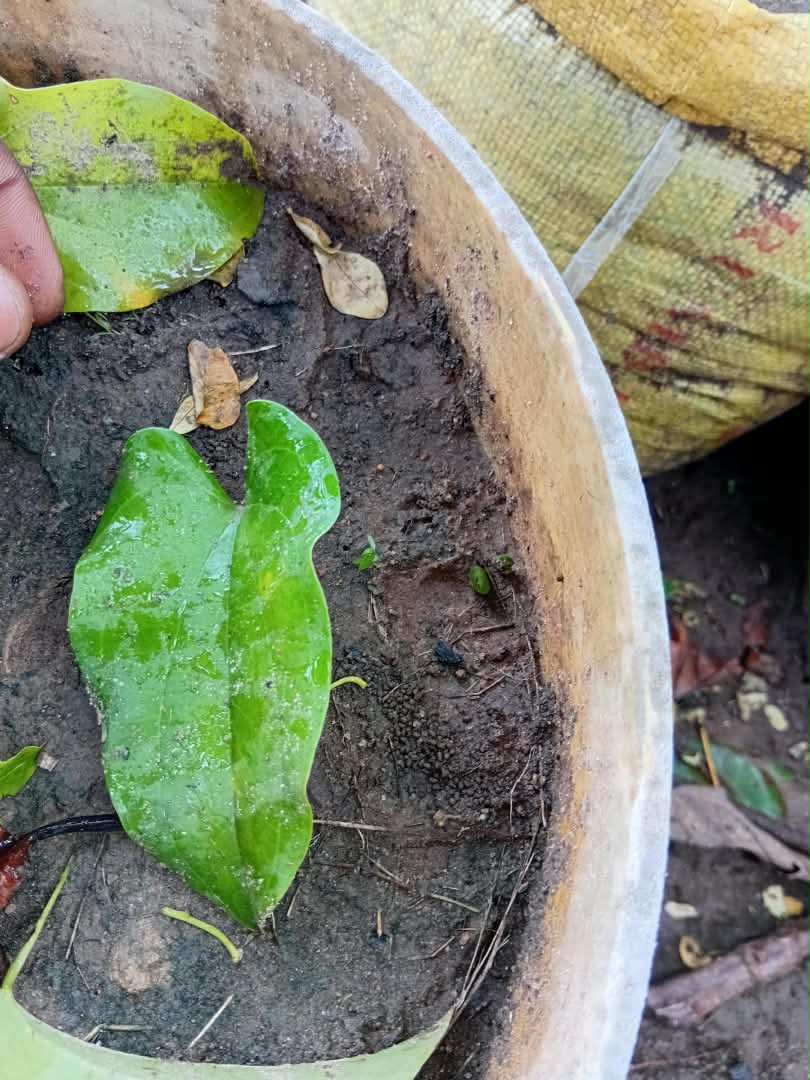
This distinction matters. We are not claiming that a detached yam leaf blade can produce a new plant by itself. The photographs show that the propagating unit included living nodal stem tissue. The roots observed later emerged around that node and adjoining stem tissue.
The first evidence: 1 September
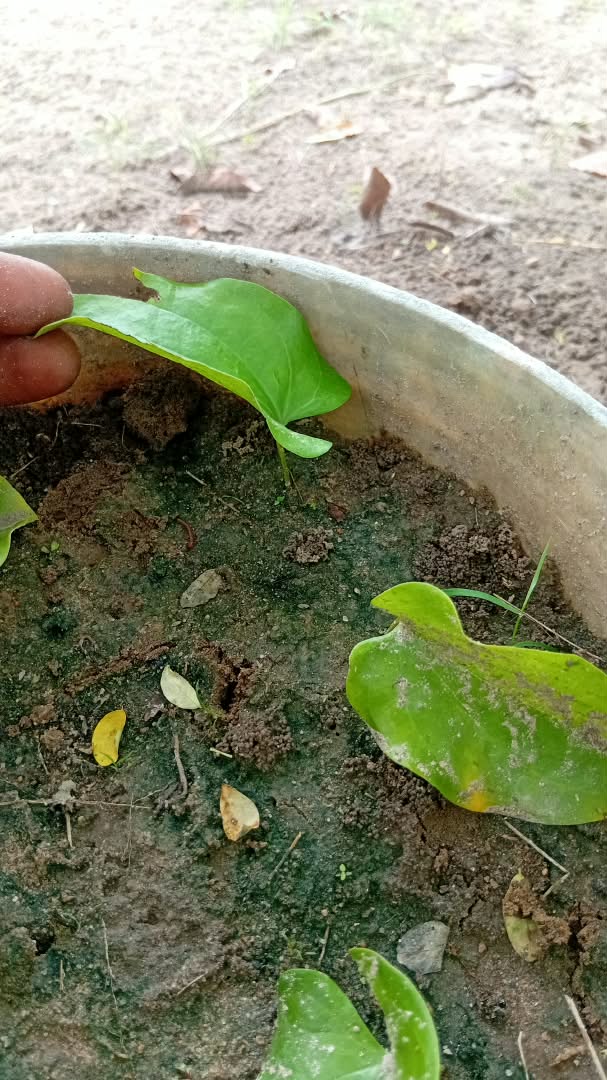
By approximately 1 September—about 22 days after planting—some cuttings showed the beginnings of root development. When examined closely, small pale protrusions and early roots could be seen around the buried node.
Not every specimen was equally advanced. Some showed only root initials, while others had started producing longer roots. That variation is useful evidence: future trials should record the position of the cutting on the mother vine, node maturity, leaf condition, moisture and rooting time.
The early photographs established that the cuttings were not merely remaining green. Biological development was occurring below the surface.
What we found on 10 September
On 10 September, exactly one month after planting, the difference was striking. Several carefully lifted cuttings carried distinct white or cream-coloured roots. In the strongest specimens, the roots had elongated and begun branching. Root formation was visible on multiple independent cuttings, making the result more meaningful than an isolated success.
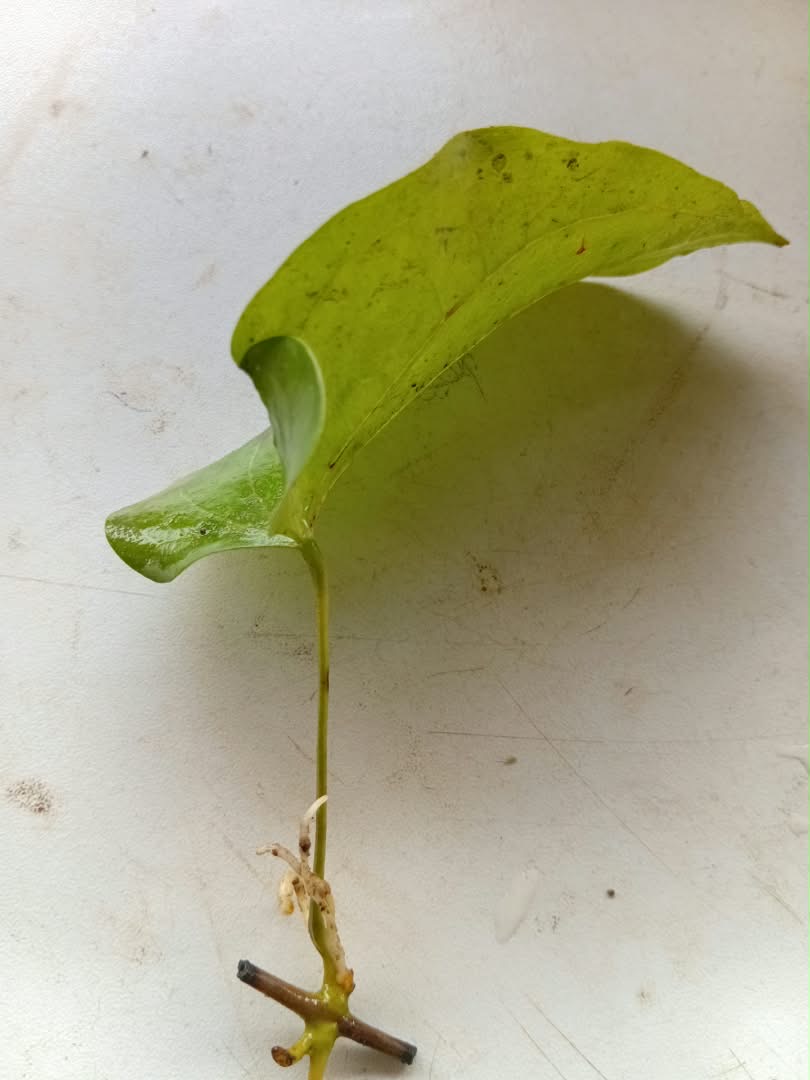
- Multiple cuttings remained alive.
- Roots developed from the nodal region.
- Some specimens formed several roots.
- Root length and branching varied between cuttings.
- The method produced repeatable rooting within the group examined.
This is a successful rooting result—not yet a final yield result.
What the result proves—and what it does not
Good farm experimentation requires restraint. Our palm-weevil breeding experiment in Mondouku applies the same cautious approach. It is tempting to move immediately from “the cuttings rooted” to “we have solved yam multiplication.” The photographs support the first statement, not yet the second.
At this stage, the trial demonstrates that very small single-node yam vine cuttings can survive and initiate roots in the conditions used at Excell Africa Farms.
- How many of the original cuttings rooted?
- How many survive transplanting?
- How quickly do new shoots and vines emerge?
- Will the plants develop tubers?
- What number and weight of tubers will be produced?
- Can the result be repeated across seasons and yam varieties?
These questions are not weaknesses in the story. They are the next chapters of it.
The next stage of the farm trial
The rooted specimens will be transferred gently into individual nursery containers containing a loose, well-draining growing medium. They will initially remain under bright shade, with moisture controlled carefully to avoid both drying and waterlogging.
Each plant should now receive an identification number. The farm team will record its condition at transplanting, root development, date of new shoot emergence and survival status.
On 10 October 2026, we plan to publish the first formal update. We will report how many rooted cuttings survived, how many produced fresh shoots, whether underground development is continuing and which cutting characteristics appear associated with success.
Why this matters beyond one container
African agriculture does not advance only through expensive machinery or distant laboratories. It also advances when farmers observe closely, test ideas, measure outcomes and share both successes and failures.
If this method proves reliable, it could contribute to a low-cost nursery system for multiplying selected yam plants. It may help conserve preferred farm varieties, reduce the amount of edible tuber committed to planting and allow farms to scale planting material more efficiently.
Those potential benefits remain hypotheses until the full growing cycle is completed. For now, the roots are the evidence—and the evidence is encouraging.
At Excell Africa Farms, this is what “From Soil to Significance” means: begin with a practical question, test it in the soil, document what happens and turn the result into knowledge that others can use.
Next field update: 10 October 2026.
Follow the experiment—and learn the method
JustLearn will document the 10 October 2026 field update. For structured learning in practical agriculture and farm enterprise, continue with Sharper Minds Academy.