Standfirst: Excell Africa Farms began with eight adult palm weevils and a locally prepared substrate of coconut husk, cassava, banana and chicken feed. The appearance of more than 100 larvae answered the first question—can it work?—and opened a much larger investigation into how it can become a safe, repeatable African farming enterprise.
At Excell Africa Farms, learning does not end with theory. We test ideas, observe what happens, record the results and decide whether an experiment can become a practical enterprise.
Our palm-weevil larvae experiment began after practical training in Abidjan. We started with only eight adult weevils and one important question: could we create the right conditions for them to reproduce using materials that African farmers can obtain locally?
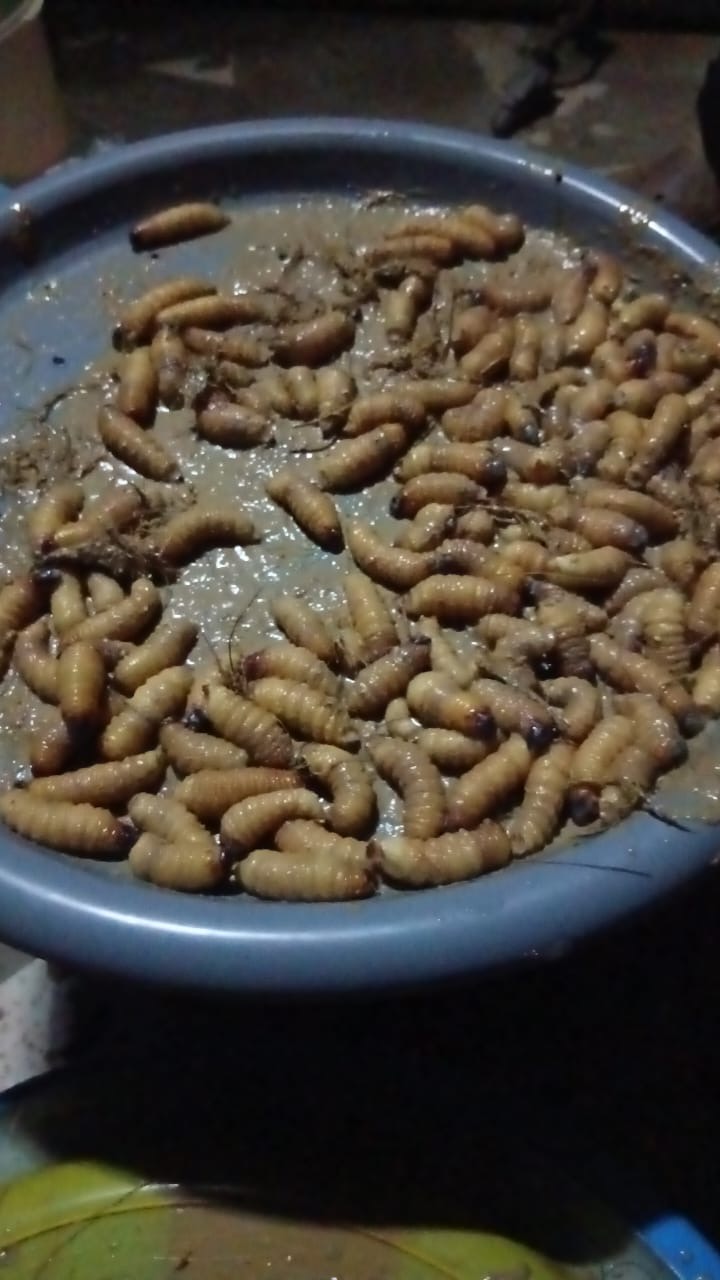
The team selected coconut husks and prepared a feeding substrate from cassava, banana and chicken feed. The breeders were placed in the prepared environment and given time to reproduce. When the material was opened, more than 100 developing larvae were observed. Many had grown into large, cream-coloured grubs with darker heads.
That result does not yet prove a fully commercial business. We still need measured answers on survival, feed conversion, production time, hygiene, processing, storage and market demand. But the first question has been answered: under the conditions used in this trial, eight adult palm weevils produced a substantial first generation.
This is what we did, what happened and what we must learn next.
1. The experiment begins: eight adult breeders
The project did not begin with a large building, expensive imported machinery or hundreds of breeding insects. It began with knowledge, eight adult palm weevils and a willingness to test a method carefully.
That distinction matters. Palm-weevil larvae are traditionally collected from palms and other plant material in several parts of Africa. Collection can provide food and income, but it depends on finding naturally infested material and may involve damaging useful palms. Managed production asks a different question: can the farmer create a controlled environment in which the insects reproduce without relying entirely on wild harvesting?
Our training in Abidjan provided the practical starting point. Back at the farm, the team translated that knowledge into a small trial. The objective was not to announce a miracle business. It was to establish whether a breeding cycle could be initiated and observed with limited stock and locally available inputs.
The eight adults became our foundation breeders. The team prepared the breeding material, introduced the adults and allowed the process to develop. The number of adults was small enough to manage, but large enough to test whether reproduction would occur.
This is the Excell Africa Farms approach: start at a scale where mistakes can teach us without becoming financially disastrous. A small trial cannot answer every commercial question, but it can reveal whether an idea deserves a second, better-measured trial.
2. Preparing the substrate: the practical “how”
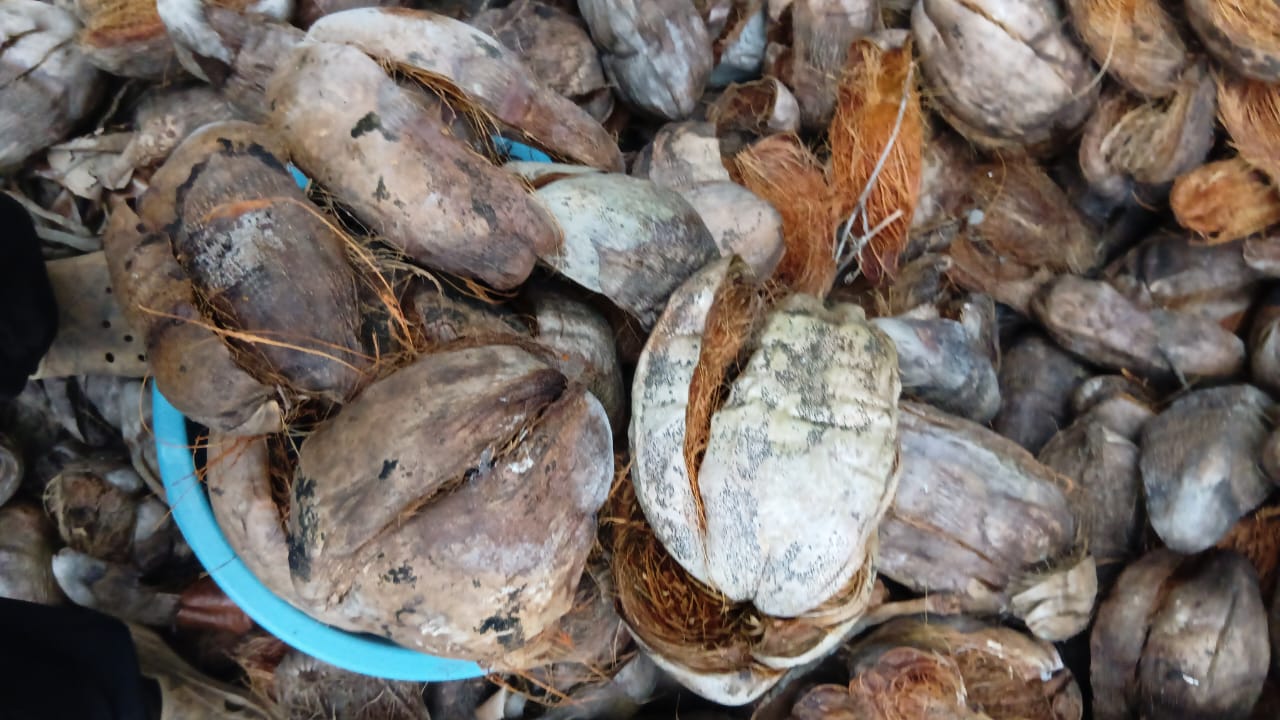
The breeding environment was built around materials visible in our farm records: selected coconut husks and a mixed substrate containing cassava, banana and chicken feed.
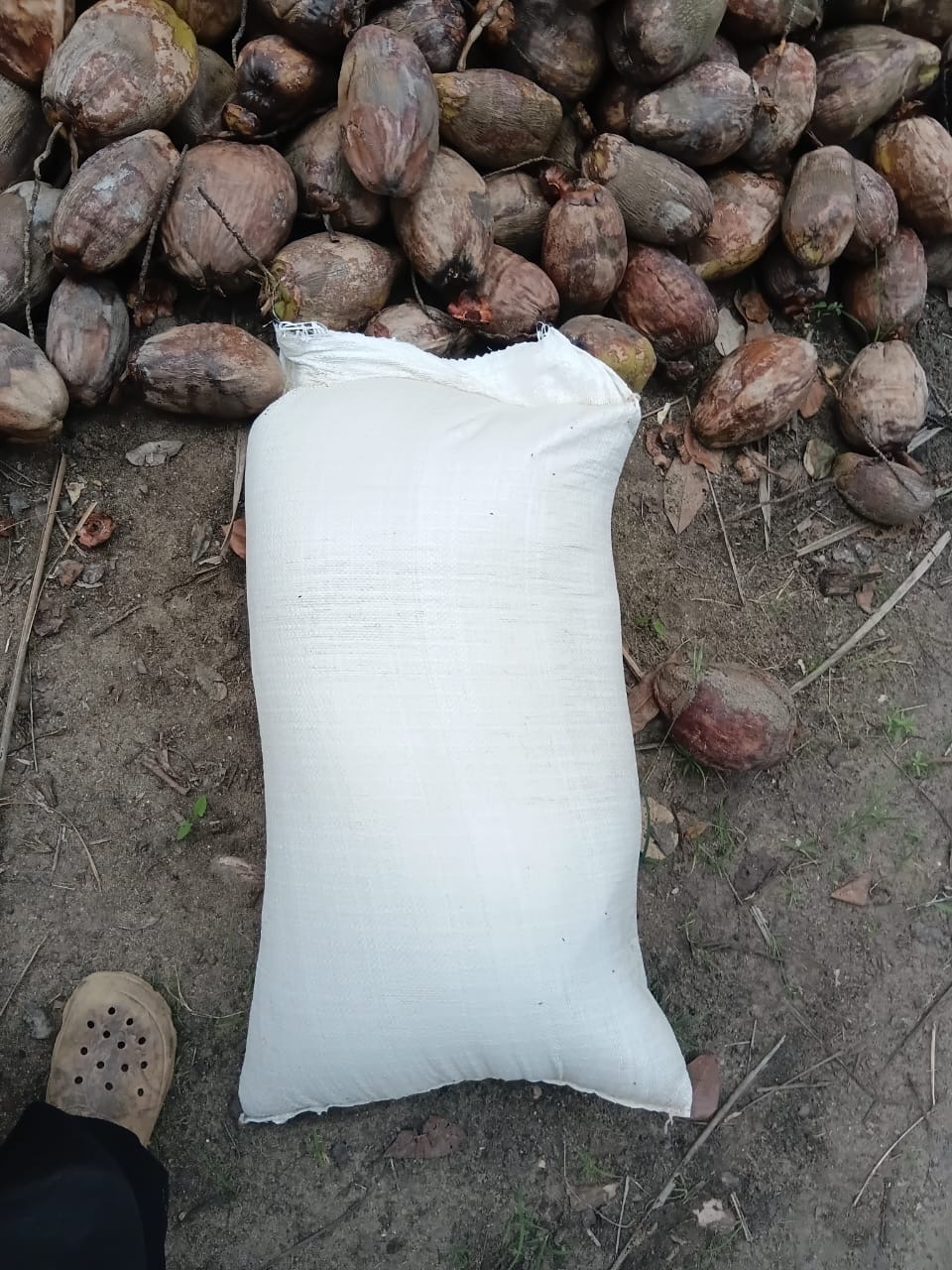
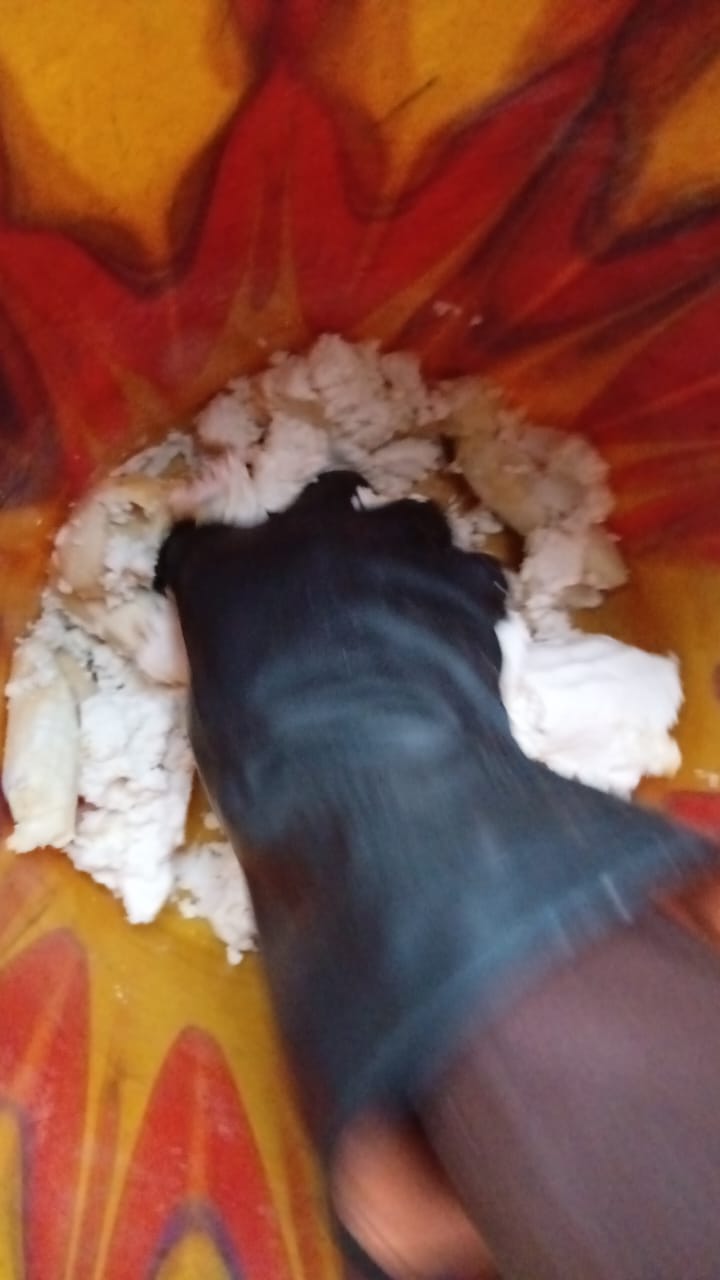
Each component has a practical role in the trial. The coconut material provides bulk and structure. Cassava and banana provide plant-based organic material, moisture and energy. The chicken feed adds a formulated feed component. Together they created the moist feeding medium in which the larvae developed.
This formulation is reported here as our trial method, not as a universal or scientifically optimised recipe. We have not yet established the ideal ratios, moisture content, temperature or amount of feed required per larva. Publishing exact claims without those measurements would turn an honest experiment into false precision.
The next production cycle should therefore be documented more rigorously. Every ingredient should be weighed. Water or other added liquid should be measured. The preparation date, number and sex of adult breeders where identifiable, ambient temperature, first appearance of larvae, mortality and final harvest weight should all be recorded.
That record will allow us to compare batches. For example, does a higher proportion of coconut material improve aeration? Does too much moisture cause spoilage? Does additional chicken feed increase growth enough to justify its cost? Does the substrate remain productive for a second cycle, or should it be replaced?
Without records, a successful batch is a welcome event. With records, it begins to become a production system.
3. What happened inside the breeding unit
After the breeders were introduced, the most important work was happening out of sight. Adults reproduced, eggs developed and the emerging larvae began feeding within the prepared material.
This hidden stage is one reason palm-weevil production demands discipline. Opening the unit too frequently may disturb the environment, while leaving it unchecked for too long may allow larvae to pupate or the substrate to deteriorate. The farmer needs a repeatable inspection timetable based on observation rather than guesswork.
Our first cycle demonstrated successful reproduction and larval development. It did not, however, tell us how many eggs were laid or what percentage survived. “More than 100 larvae” is a strong outcome from eight adults, but the next trial should count—or carefully estimate—larvae by size group and record any dead or damaged specimens.
The farm should also retain a selected portion of healthy larvae to complete their development into pupae and adults. Harvesting every larva may produce an immediate crop but leaves no breeding stock for continuity. A sustainable unit needs a planned division between larvae for sale or consumption and larvae retained to renew the breeding colony.
4. The first harvest: what the result proves
The bowl of larvae is the clearest evidence from the trial. It shows a substantial population at different sizes, produced from a very small founding group.
What does that prove?
- The adult breeders reproduced under the conditions provided.
- The locally prepared substrate supported larval development.
- The method is sufficiently promising to justify a controlled second cycle.
What does it not yet prove?
- The exact number of marketable larvae produced per adult female.
- The cost of producing one kilogram.
- The best harvest age or optimum larval size.
- The safety and shelf life of the harvested product.
- The profitability of production at commercial scale.
This distinction is essential. Agriculture is full of impressive photographs that never become dependable businesses. Commercial production requires consistent yields, controlled losses, reliable customers and evidence that selling prices exceed the full cost of labour, feed, containers, processing, transport and rejected batches.
Palm weevils can also be serious pests of living palms. Any managed production system must therefore use secure containers and responsible handling so that adult insects do not escape into coconut, oil-palm or raffia-growing areas. Production should use prepared or waste materials rather than sacrificing healthy productive palms.
5. From experiment to enterprise
The next step is not simply to make a bigger batch. It is to make a better measured batch.
For the second cycle, Excell Africa Farms should keep a production sheet containing:
- Number of adult males and females introduced, where reliably identified.
- Exact weight and cost of coconut husk, cassava, banana and chicken feed.
- Water added and substrate moisture observations.
- Dates for setup, breeder removal, first inspection and harvest.
- Number and total weight of live larvae harvested.
- Number retained for pupation and future breeding.
- Mortalities, mould, odour, overheating or other problems.
- Labour time, packaging, processing and total production cost.
Several small batches with one controlled difference would teach us more than one very large batch. One batch could use the current formulation as the control. A second might adjust moisture. A third might change the proportion of formulated chicken feed. Outcomes could then be compared without confusing several changes at once.
Food safety must become a separate workstream before any public sale. The substrate ingredients should be clean and traceable; the production environment should prevent contamination by rodents, chemicals and dirty water; harvested larvae should be handled hygienically; and any product intended for consumption should be properly cooked or processed. Local food-business and environmental requirements must be checked in the country where production and sale occur.
There is a credible wider opportunity. Edible insects are already consumed in many cultures, and international reporting has documented organised palm-weevil-larvae production supplying consumers and restaurants in the Democratic Republic of Congo. The UN Food and Agriculture Organization has also identified insects as potential sources of protein, fat and micronutrients. Those wider examples demonstrate interest—not automatic profitability for our farm.
Potential markets may include fresh or processed larvae for established food traditions, breeding starter units, practical training and research partnerships. Animal-feed uses would require separate nutritional, safety and regulatory assessment; they should not be assumed from a food trial.
What we learned
Eight adult weevils. Coconut husks. Cassava. Banana. Chicken feed. More than 100 larvae.
The result is striking because the starting point was small and the materials were ordinary. Yet the most valuable product of this first cycle is not the bowl of larvae. It is the knowledge that a managed breeding process can work—and a clearer list of the measurements needed to make it repeatable.
This is exactly what From Soil to Significance means at Excell Africa Farms: taking local materials, practical knowledge and disciplined experimentation and asking whether they can produce food, skills, jobs and stronger African enterprises.
The first cycle answered if. The next cycle must answer how well, how safely and at what cost.
Continue learning
- Explore our related field story on rice, plantain and the waterside development at Excell Africa Farms.
- Read our practical reports on Pekin ducks and Muscovy ducks at the Mondouku farm.
- Compare this livestock trial with our Wasinmi yam-vine rooting experiment, another From Soil to Significance field test.
- Follow JustLearn for the next measured palm-weevil production cycle and future farm-to-classroom learning.
Turn field evidence into enterprise learning
JustLearn documents the palm-weevil trial at Excell Africa Farms. Sharper Minds Academy turns evidence like this into structured learning for farmers and agricultural entrepreneurs.
Editorial note
This article reports an Excell Africa Farms field trial. The exact palm-weevil species has not yet been independently confirmed. Production and food-safety requirements vary by location; readers should seek appropriate agricultural and regulatory guidance before breeding insects or selling insect-based foods.
Sources and further reading
- Food and Agriculture Organization of the United Nations, Edible insects: Future prospects for food and feed security.
- Reuters, “Orphans in Congo fed palm weevil larvae in bid to beat malnutrition,” 25 June 2024.