A Facebook post about “fake agriculture schools” sent me back to an experience that had nothing to do with farming — and everything to do with how we confuse training with competence.
A recent post from Farm with mufasa warned readers about agricultural schools that promise certificates, mentorship, jobs and markets but, in the author’s view, deliver little practical farming experience. The language was deliberately provocative. Some of its tests were too absolute for me. A training provider does not necessarily need to own a farm to teach agriculture well, and a short course is not automatically worthless.
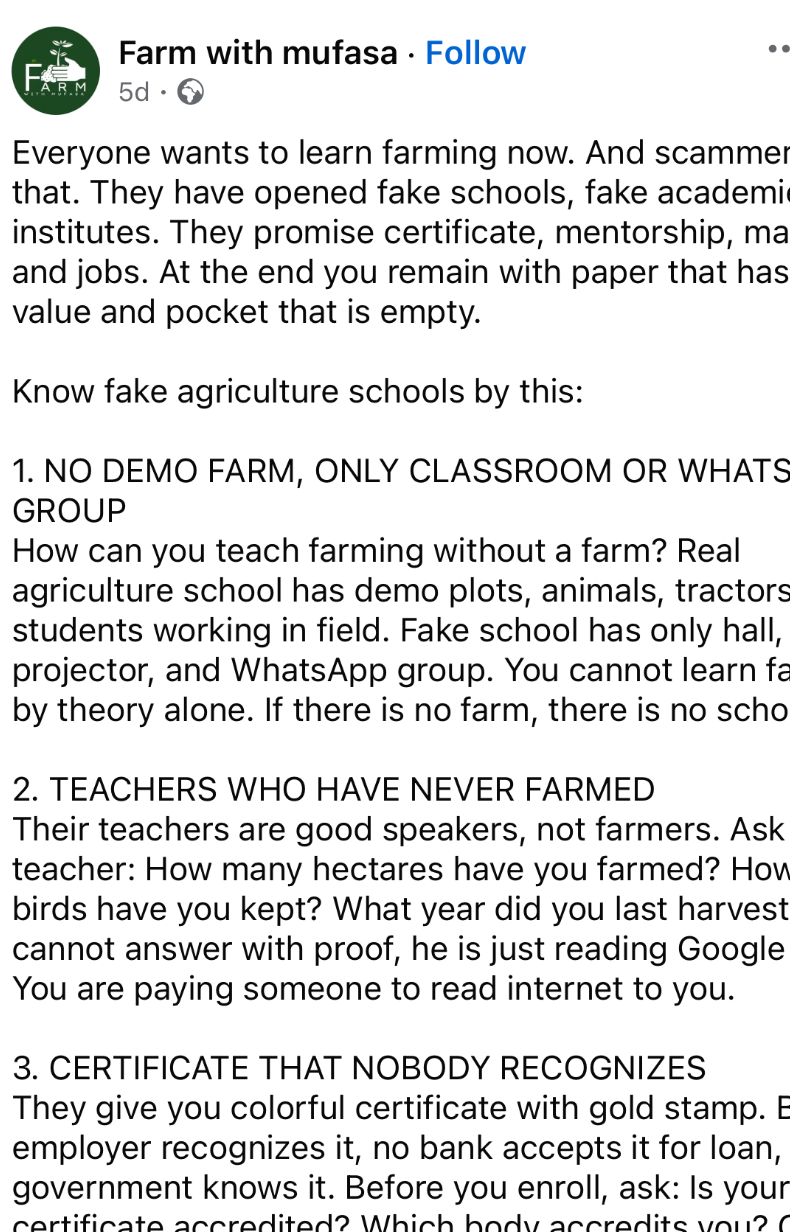
But beneath the provocation was a serious question:
When does learning become competence?
I had already encountered exactly the same question in a completely different field: domiciliary care.
I Had Completed the Courses — But Had I Seen the Real Work?
In September 2026, while exploring the care sector and developing what would become EverNear, I undertook online care training through CareDemy. My transcript showed completed modules in subjects including fire safety awareness, food hygiene, hand hygiene, health, safety and welfare, medicines control and administration, infection prevention and control, and personal protective equipment. The transcript recorded an overall average score of 81% and seven CPD earned.
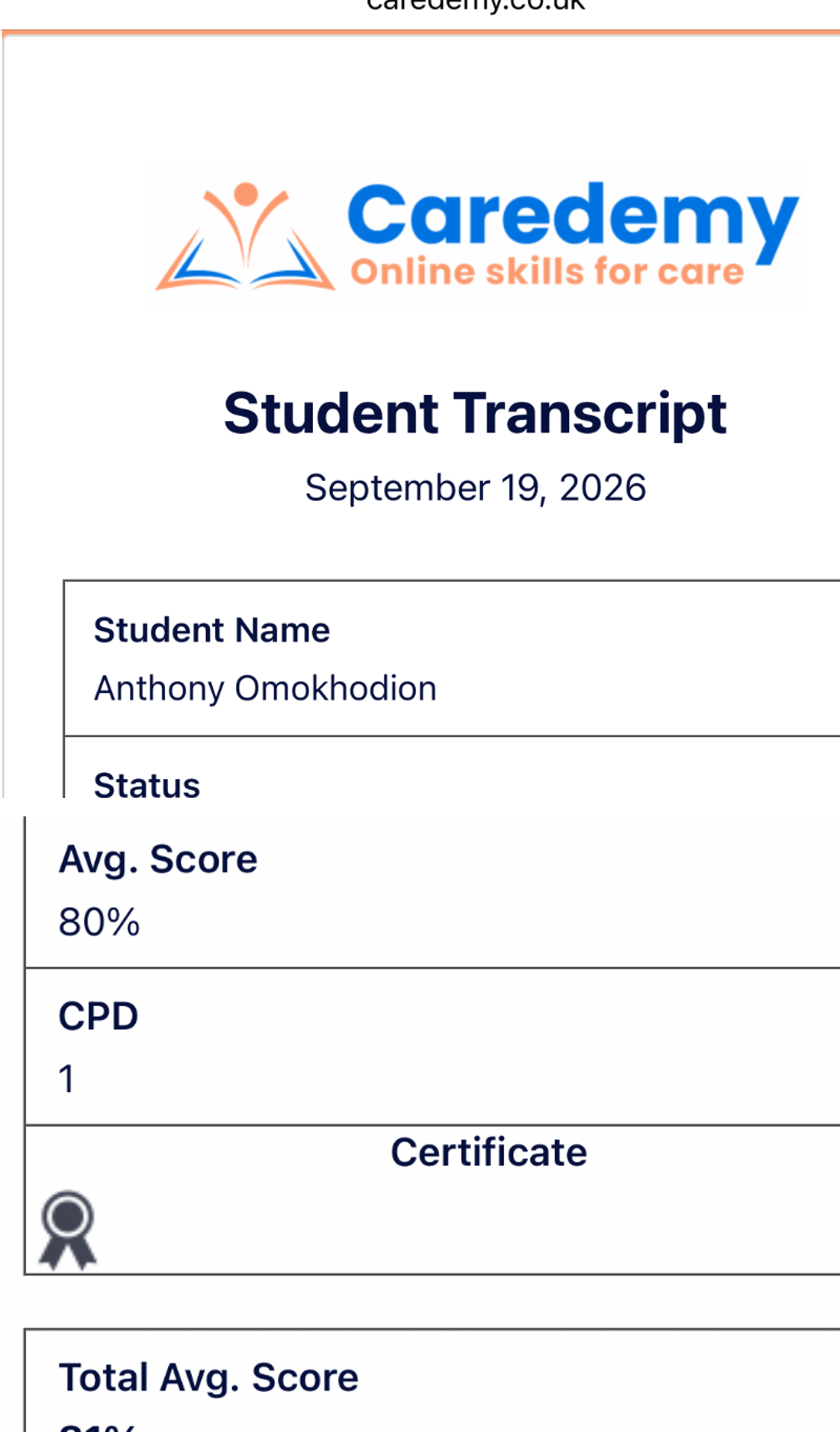
These were not meaningless courses. They introduced important principles, terminology, procedures and risks. I learned from them.
But there came a moment that changed my view of vocational education.
I had completed a substantial amount of online care training before I had even encountered some of the physical reality behind the job — including equipment such as a hoist.
That distinction matters.
I could read about moving and handling. I could answer questions. I could pass assessments. I could accumulate certificates. But none of those things, by themselves, meant that I was practically competent to operate unfamiliar equipment with a vulnerable person.
That is not a criticism of online learning. It is a criticism of confusing one stage of learning with the whole journey.
Know It. See It. Do It. Prove It.
The experience gave me a simple framework that now applies far beyond care:
KNOW IT → SEE IT → DO IT → PROVE IT
First, learn the principle.
Then see the principle operating in the real world.
Then perform the activity appropriately, with the right supervision where required.
Finally, demonstrate that you can apply what you have learned when circumstances are not identical to the textbook example.
That last stage is where judgement enters.
And judgement is difficult to measure with a multiple-choice test.
The Poultry Farmer Who Knows Every Answer
Consider poultry farming.
A learner can complete an online course on brooding. They may know the recommended temperatures, vaccination schedules, feed stages and stocking densities. They may score 90% in an assessment.
Then put that person into a brooder house at 2:00 a.m. when electricity fails.
The chicks begin clustering.
Litter becomes wet.
Feed intake changes.
Mortality appears.
The market suddenly delays collection.
Now the examination has begun.
The birds do not provide four possible answers and ask the farmer to tick one.
They behave.
The farmer must observe, interpret, decide and act.
That is the difference between knowing about farming and beginning to become competent at farming.
Care Has the Same Problem — But the Stakes Are Human
The same principle applies in domiciliary care, except the subject is not a crop or a flock. It is a person.
Someone can know the principles of infection control, medication awareness, safeguarding or moving and handling. That knowledge is essential.
But practical work introduces another layer: the individual person, their home, their mobility, their preferences, their support plan, the equipment available and the limits of the worker’s competence.
One of the most important professional skills may therefore be knowing when not to act.
There is no virtue in stretching a certificate beyond what it proves.
That Lesson Helped Shape EverNear Companions
This became important as I developed EverNear Companions.
EverNear Companions is deliberately positioned around companionship and practical human presence. It is not built on the pretence that completing a collection of online courses automatically transforms somebody into a practitioner capable of performing every form of personal or clinical care.
That boundary is not a weakness.
It is part of professionalism.
When a person’s needs fall outside the scope of companionship, the correct response is not to improvise beyond competence. It is to recognise the boundary and involve the appropriate service or practitioner.
Sometimes professionalism is not proving that you can do everything.
It is knowing exactly what you should not do.
Now Return to the “Fake Agriculture School” Debate
The Facebook post that started this discussion makes several powerful points, but I would frame the issue differently.
I would not say:
“If there is no farm, there is no school.”
A legitimate provider could use partner farms, supervised placements, demonstration centres or learners’ own farms.
I would instead ask:
Can this provider demonstrate how learners move from information to practical competence?
Likewise, I would not say that every short agricultural course is suspect.
A two-hour course can teach one useful thing extremely well.
A learner might genuinely acquire a narrow skill such as calculating stocking density, selecting pineapple planting material, preparing a simple farm budget or understanding brooder temperature management.
The problem comes when a narrow course makes an enormous promise.
There is a difference between:
“By the end of today you will understand the principles of broiler brooding.”
and:
“By the end of today you are a commercial poultry farmer.”
The first can be honest education.
The second may be marketing dressed as competence.
Certificates Matter — But What Exactly Do They Certify?
This is where the debate becomes uncomfortable.
We like certificates because they are visible.
They can be printed, framed, uploaded to LinkedIn and added to a CV.
Competence is harder to display.
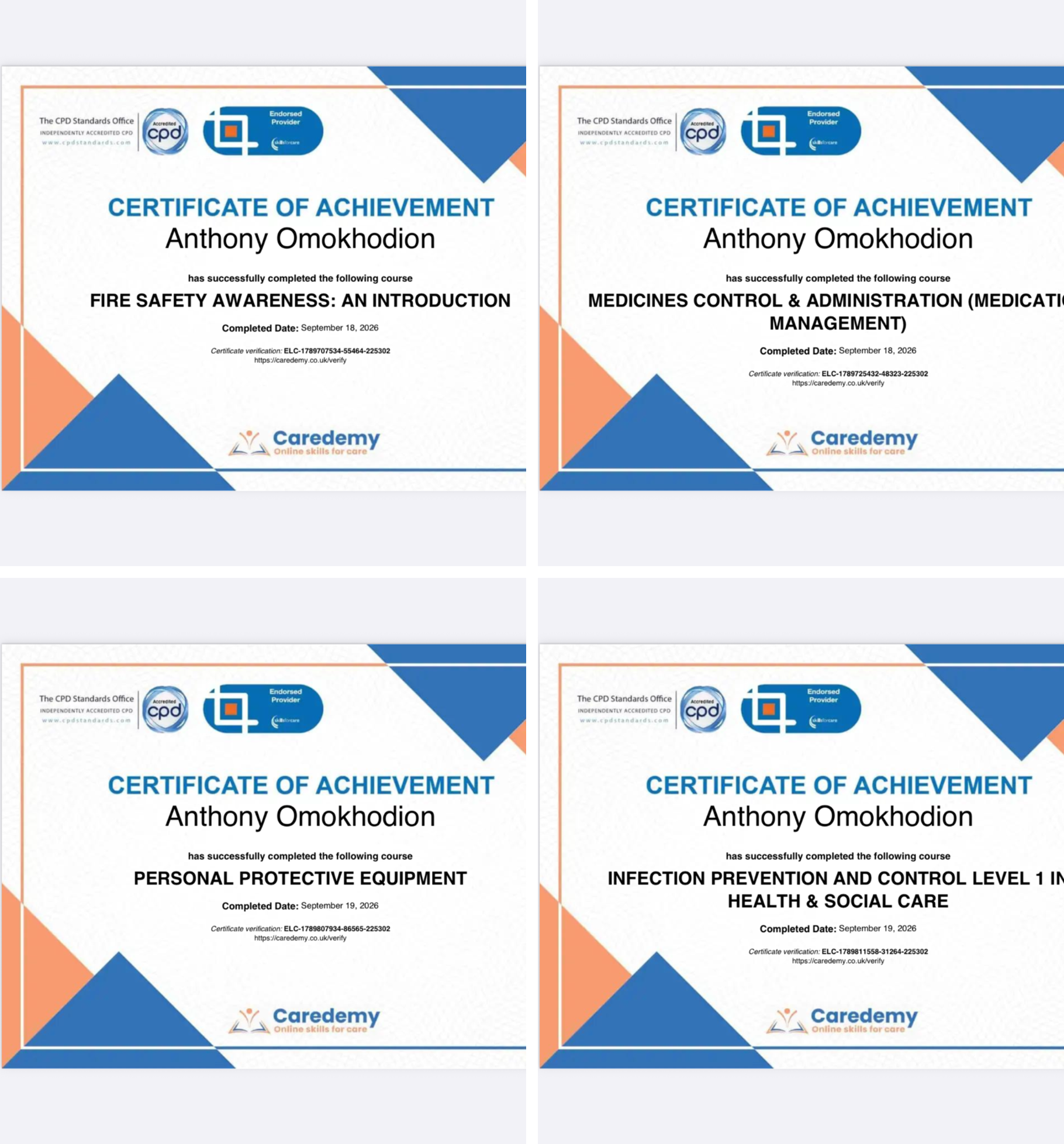
A certificate may prove attendance.
It may prove that a course was completed.
It may prove that an assessment was passed.
It may record CPD.
Those things can all be useful.
But a certificate should not quietly expand its own meaning.
A certificate of achievement in an introductory module is not automatically evidence of unsupervised occupational competence.
Perhaps vocational certificates should sometimes say less — and say it more precisely.
Instead of implying complete mastery, state exactly what the learner studied and what was assessed.
The certificate should be the record of learning, not a substitute for learning.
Information Is Becoming Cheap. Competence Is Not.
This question is becoming more urgent because access to information has changed.
Google made information searchable.
YouTube made demonstration widely available.
AI can now explain, translate, tutor, quiz, summarise and simulate.
So what should a learner increasingly pay an education provider for?
Not merely information.
They should be paying for structure, feedback, context, supervised practice where required, assessment, mentorship, judgement and evidence of development.
That is where education can add value beyond a search engine or chatbot.
What This Means for Excell Africa Farms, JustLearn and Sharper Minds Academy
This question also applies to our own work.
At Excell Africa Farms, farming generates experience.
We plant.
We rear animals.
We experiment.
We make mistakes.
We document what succeeds and what fails.
Those observations become photographs, records, articles and lessons.
JustLearn turns experience into documented knowledge.
Sharper Minds Academy can turn structured knowledge into learning programmes.
But the process should not stop there.
The ambition should increasingly be:
Farm → Observe → Document → Teach → Practise → Prove → Improve
That is much stronger than:
Read → Quiz → Certificate.
A Better Question for Every Learner
Before paying for agricultural training, care training or any practical course, stop asking only:
“What certificate will I receive?”
Ask instead:
“What will I actually be able to do afterwards that I cannot competently do today?”
Then ask how that competence will be developed and evidenced.
- Will I only watch, or will I practise?
- Will somebody give me feedback?
- Will I encounter the real equipment, environment, crop, animal or scenario?
- Will I be assessed on application, not merely recall?
- Will the provider tell me honestly what the course does not qualify me to do?
That final question may be one of the most important.
The Certificate Is Not the Product
The Facebook author ended with a simple idea: do not pay merely for a certificate; pay for skills.
I would go one step further.
Do not pay merely for information either. Pay to become more capable.
Online learning is powerful.
Certificates can be useful.
Short courses can be excellent.
But none of them should be asked to prove more than they actually prove.
The real journey is:
KNOW IT → SEE IT → DO IT → PROVE IT
Because whether we are talking about a chicken, a hydroponic system, a tractor, a hoist or a person receiving support in their own home, there comes a moment when the course ends.
And reality begins.
That is where education must prove itself.
JustLearn Takeaway
If you run a training programme, ask yourself whether learners leave with more than information. If you are choosing a course, ask what you will be able to do, not merely what you will be able to display on a certificate.
And if you are exploring companionship and practical support built around clear professional boundaries, visit EverNear Companions.