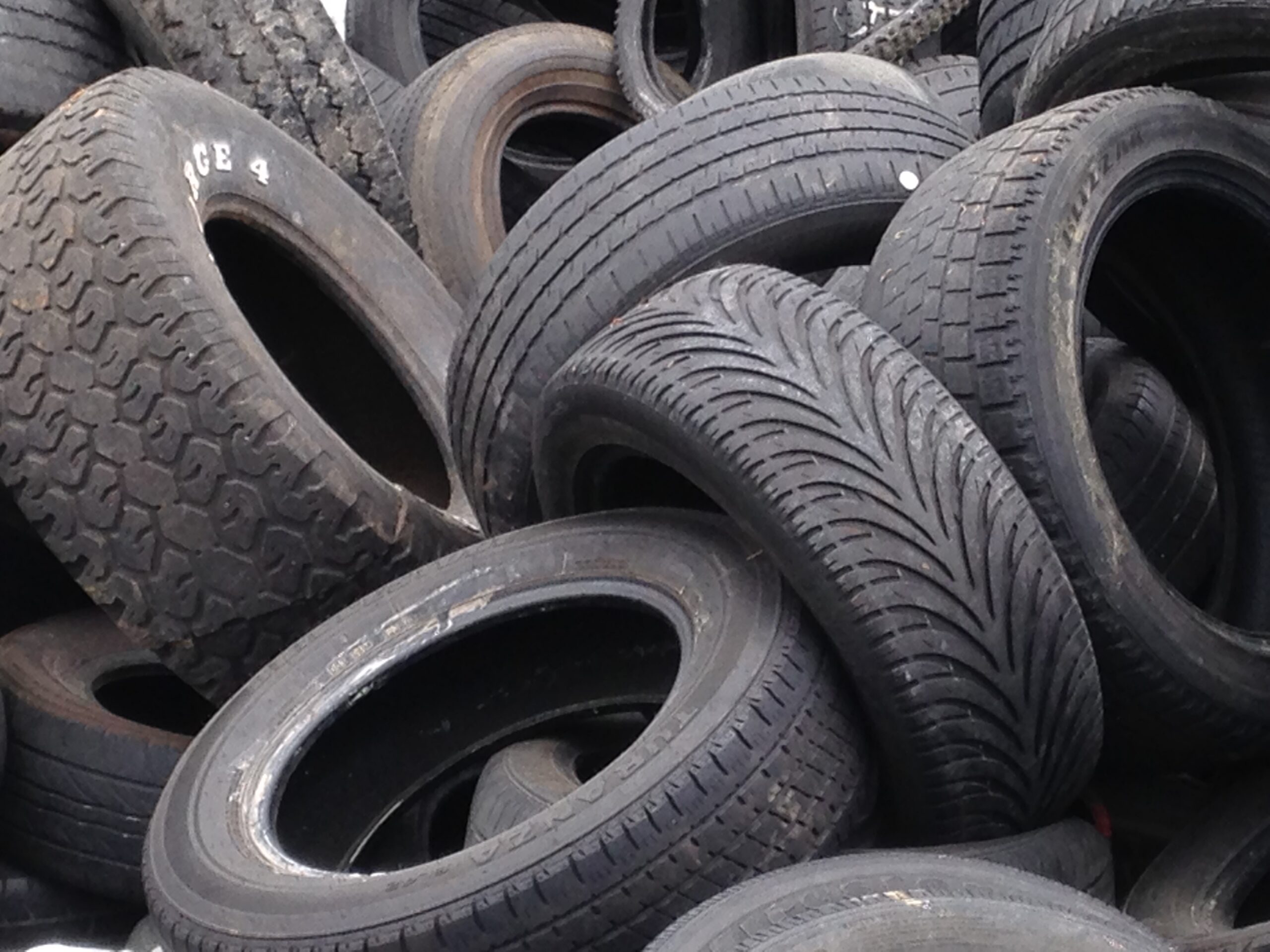
Recycled tyre roofing is the sort of idea that can divide a social-media audience in seconds. One person sees affordable shelter. Another sees a fire hazard. A third sees a business hiding inside a waste material.
I was looking at screenshots of a reel showing tread-patterned pieces being fixed across timber roof battens. The accompanying discussion moved between enthusiasm, jokes and questions about fire, sunshine, rain and cost. One reply described the material as “fireproof”.
That is where curiosity needs to become investigation. We should neither dismiss an unfamiliar material because it was once waste nor accept a safety claim because the installation looks ingenious.
The question is not simply whether an old tyre can be put on a roof. It is whether the resulting roofing system can be shown to protect the people beneath it.

1. What the Reel Shows—and What It Does Not Prove
The screenshots show an apparent installation involving dark, tread-patterned sections, timber supports and power tools. They also show claims and objections. They do not establish the material’s composition, the original filming location, the complete roof construction or its long-term performance.
I have not independently authenticated the original footage or inspected the building. The pictures alone cannot settle whether the pieces are ordinary cut tyre tread, a purpose-made product or something else. Nor do the screenshots establish that the scene is AI-generated merely because a commenter suggests it.
This distinction matters. A picture of a roof is not a weather test. A confident reply is not a fire certificate. Visible joints are not, by themselves, proof of leakage.
For a useful investigation, I would first ask for the product name, material specification, installation instructions and applicable test reports. Without those, we are discussing an idea—not verifying a building system.
2. Fire, Heat and Rain: Ask the Right Questions
Is recycled tyre roofing fireproof?
Ordinary tyre rubber is not fireproof. The US Environmental Protection Agency’s archived guidance explains that waste tyres can resist initial ignition, yet established tyre fires can be exceptionally difficult to control. Burning tyres can release hazardous smoke and oily residues. [1]
That does not mean a small flame will inevitably ignite every rubber roof. Equally, a tyre-stockpile fire is not an exact model of a particular roofing assembly. The sound conclusion is narrower: the material can burn, and the proposed roof needs relevant evidence about its behaviour.
Intertek explains that ASTM E108 tests roof coverings installed on test decks under simulated external fire exposure, including wind conditions. Its classifications describe performance under specified tests; they are not a declaration that a material cannot burn or a guarantee against every possible building fire. [2]
A useful report therefore needs to identify the product and tested assembly. A classification for one combination of covering, deck and other components is not something we should casually transfer to an unidentified arrangement in a reel.
Will the African sun melt the rubber?
Ordinary tyre rubber is vulcanised. Cross-linking joins its polymer chains into a network; it does not behave like a thermoplastic that can simply be melted and reshaped. Yale’s teaching material identifies vulcanised rubber among these permanently set materials, while UNSW explains the role of cross-links in polymer behaviour. Strong heating can damage or decompose such materials rather than producing a conveniently reusable liquid. [3] [4]
Predicting that ordinary sunshine will turn tyre tread into a puddle is therefore not a sound objection. But correcting that misconception does not establish suitability for a roof.
The more useful questions concern surface temperature and the conditions beneath the roof. The EPA’s cool-roof guidance identifies solar reflectance and thermal emittance—the ability to reflect sunlight and release absorbed heat—as important characteristics. [5]
For a proposed application, I would want temperature measurements and an assessment of the complete building, including insulation and ventilation. A material that remains intact in sunshine has not automatically created a comfortable classroom, bedroom or poultry house.
Would the joints let rain through?
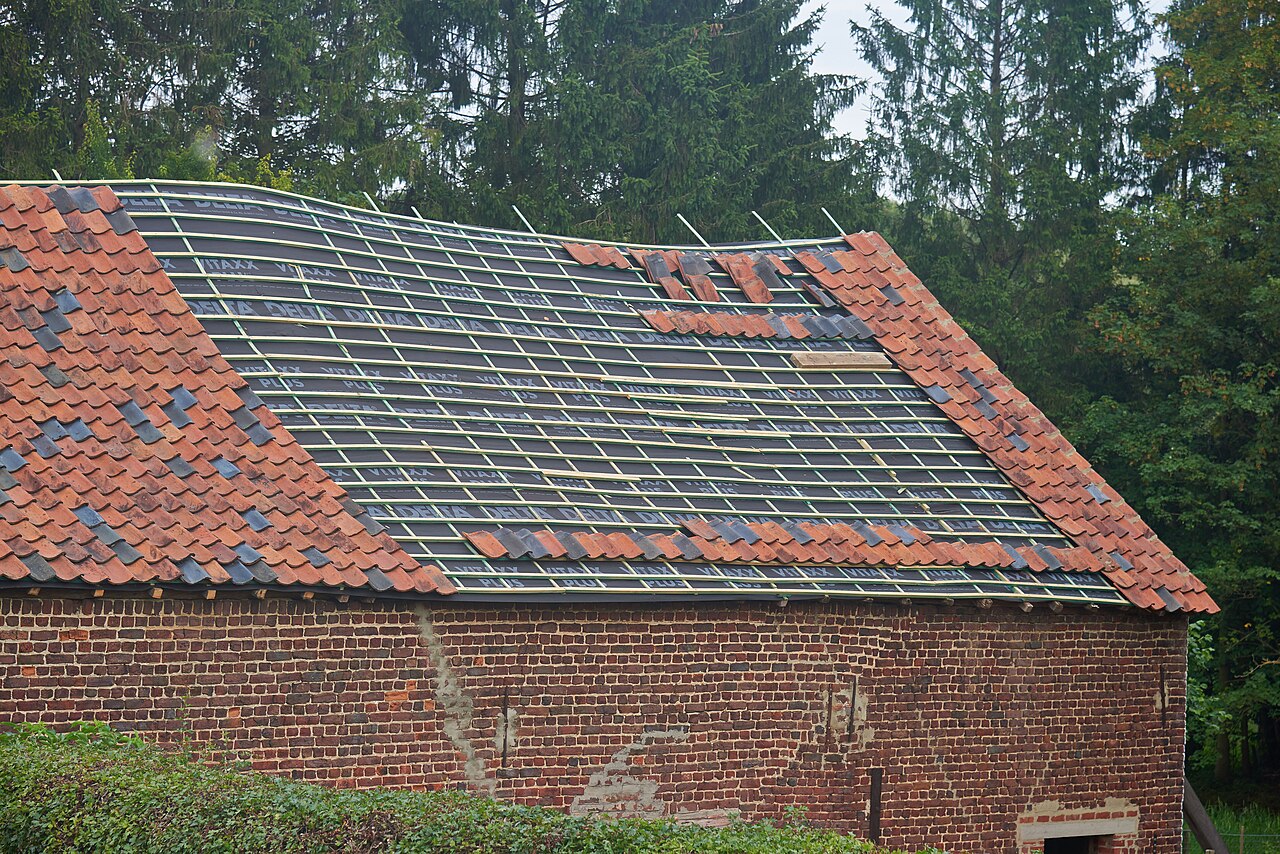
A visible joint is not automatically a leak. The relevant issue is how the complete covering sheds water, including its overlaps, fixings, roof slope and details around edges and openings. As a concrete example, Euroshield’s installation guide for specified manufactured rubber shingles calls for a suitable sheeted roof deck, roofing underlay, prescribed fixings and a defined panel layout. [6]
Those instructions are product-specific, not a universal recipe for every roof. They demonstrate how much can sit behind an apparently simple covering.
In the screenshots, the complete weatherproofing arrangement cannot be verified. Neither “it must leak” nor “it never leaks” has been established. An unspecified sheet of plastic underneath would not, on its own, prove that the whole roof was properly designed.

What about smell, weight and rainwater?
These are sensible matters to investigate, not reasons to invent an answer. Euroshield acknowledges that its own manufactured roofing can initially have a rubber odour which, it says, dissipates after weather exposure with appropriate attic ventilation. That statement concerns its product, not every discarded tyre. [7]
For an unidentified material, I would require a separate assessment of odour and emissions, runoff quality, installed weight and fixing strength. The screenshots establish none of those results. In particular, I would not assume that water collected from an experimental tyre roof is suitable for drinking or food-related use without appropriate evidence.
3. Recycled Tyre Roofing Already Exists—but Manufacture Matters
There is a real commercial example behind the broader idea. Canadian manufacturer Euroshield states that approximately 70% of its roofing material is recycled tyre rubber, combined with other ingredients. It supplies purpose-made shingles and supporting installation documentation. These are the manufacturer’s descriptions of its products, not an independent endorsement of the reel. [7] [6]
This establishes that tyre-derived material can be part of a manufactured roofing product. It does not establish that cutting up any old tyre produces an equivalent product.
The distinction is between a raw material and a specified application. The existence of a manufactured example is a reason to investigate further, not permission to borrow its performance claims for a different construction.
As a business-development question, this is much more interesting than arguing over whether rubber is inherently good or bad. What preparation, formulation, design and quality control would be needed to make the same product consistently? Which requirements would apply to the intended market? What would independent testing actually show?
Waste does not become a dependable building product merely by being moved from the ground to a roof.
4. The Business Is Not the Tyre. It Is the Transformation.
This connects with the question in our article on the hidden business inside coconut husks: what are we overlooking because we have only learned to see it as waste?
But recognising potential value is the beginning of the calculation, not the end.
Comparing the retail price of a new, roadworthy tyre with a roof tile misses the proposed waste-recovery model. Yet the opposite shortcut—“scrap tyres are cheap, therefore this roof is cheap”—is no better.
A feasibility study should count collection and transport, sorting and cleaning, processing equipment, labour, energy, rejected material and disposal. It should also count product development, testing, fixings, supporting roof construction, installation, maintenance and eventual replacement. A low raw-material price does not erase the rest of the bill.
The comparison I would use is the total installed and maintained cost per square metre, over a stated service period, for roofs meeting the same required performance.
There are no verified quantities, production yields or local quotations in the material supplied here. Consequently, this article does not claim a saving, profit margin or payback period.
One possible enterprise model would divide the work. A collection business could supply sorted material; a processor could prepare it; a manufacturer could produce a specified component; specialist contractors could install it. Independent laboratories and qualified designers would provide services that small producers should not pretend they can replace with enthusiasm.
That is a proposed model, not evidence that a local market is already waiting. The next commercial questions would concern real customers, competing materials, dependable supply and the cost of meeting requirements.
It is also the supply-chain perspective explored in our article on aluminium and the electric-car value chain. An entrepreneur does not necessarily have to own every stage. But somebody must be responsible for the finished product’s consistency and performance.
5. From a Promising Idea to a Responsible Pilot
For me, a responsible starting point would be a research brief, not a shopping list of tyres and roofing screws.
First, define the intended product. Identify the material, proposed roof assembly, climate and building use. Engage a qualified roofing or structural professional to establish what must be demonstrated. Review relevant existing product information without assuming that another manufacturer’s results apply to the proposal.
Next, commission appropriate evaluation. Material samples and professionally designed, unoccupied test arrangements can form part of development. The evaluation should address the relevant fire, weather, structural, ageing and environmental questions. Fire testing belongs with competent test facilities—not an improvised burning demonstration beside a home, workshop or farm.
Then assess the business against the results. Measure usable output, reject rates, labour, energy and installed cost. Compare with established alternatives. A successful sample is not yet proof of consistent production, and a short trial cannot justify a decades-long service-life promise.
I would not recommend using the apparent installation in this reel as a template for a home, school or livestock building on the evidence available. The proper outcome of an investigation might be a viable roofing product, a different application for the recovered material, or a decision not to proceed.
Any of those can be a useful result. Avoiding an unsuitable product is not a failure of enterprise; it is part of responsible product development.
The Bigger Lesson: Curiosity Needs Evidence
There is room between ridicule and unquestioning enthusiasm. We can take a waste material seriously while refusing to take an unsupported safety claim on trust.
The most useful response to the reel is neither “copy this immediately” nor “nothing useful can come from old tyres.” It is: show the material, explain the system, test the performance and calculate the full cost.
A small enterprise should be able to start small. The standard of evidence should not become smaller with it.
See it. Question it. Understand it. Then decide what is worth building.
Continue learning: Explore more Just Learn articles on enterprise, agriculture and practical innovation. For learning enquiries, use our contact form to ask about Sharper Minds Academy. This article introduces no roofing course, product certification or construction service.
Sources and Editorial Notes
[1] US Environmental Protection Agency, Tire Fires, archived scrap-tyre guidance. Used for general combustion hazards, not as a test of the roof in the reel.
[2] Intertek, ASTM E108: Fire Tests of Roof Coverings, explanation of external-fire testing and roof assemblies.
[3] Yale National Initiative, curriculum unit, “Thermoplastics vs. Thermosets” section. [4] UNSW School of Materials Science and Engineering, Polymer types.
[5] US Environmental Protection Agency, Using Cool Roofs to Reduce Heat Islands.
[6] Euroshield, installation resources, including the February 2024 Beaumont Shake/Vermont Slate guide linked there. [7] Euroshield, Frequently Asked Questions. Manufacturer information is identified as such and does not verify another installation.
Reel provenance: This discussion was prompted by screenshots supplied to Just Learn of a Facebook reel captioned “Using tyres to roof house”, displayed under the account name “Lord of entertainment”. The original filming source, location, material specification and completed roof have not been independently verified. The two photographs used in this article are separately credited reference images, not stills from that reel. Individual commenters are not identified.
Scope: Educational editorial analysis, not an installation guide, product approval or site-specific engineering assessment. Sources checked on 24 September 2026.