At Excell Africa Farms in Wasimi, an indigenous crop climbed into the roof of our greenhouse, flowered, produced fruit—and gave us an unexpected lesson in low-cost vertical farming.
Sometimes the farmer teaches the plant. Sometimes the plant teaches the farmer.
This week, our Igbo egusi taught us something.
We planted the crop we know locally as Igbo egusi in and around our greenhouse at Excell Africa Farms. We already knew it was a vigorous vine. What we had not designed was what happened next.
It climbed. Its tendrils found the greenhouse supports. The vines continued upwards. Leaves spread across the roof space. Large yellow flowers appeared overhead.
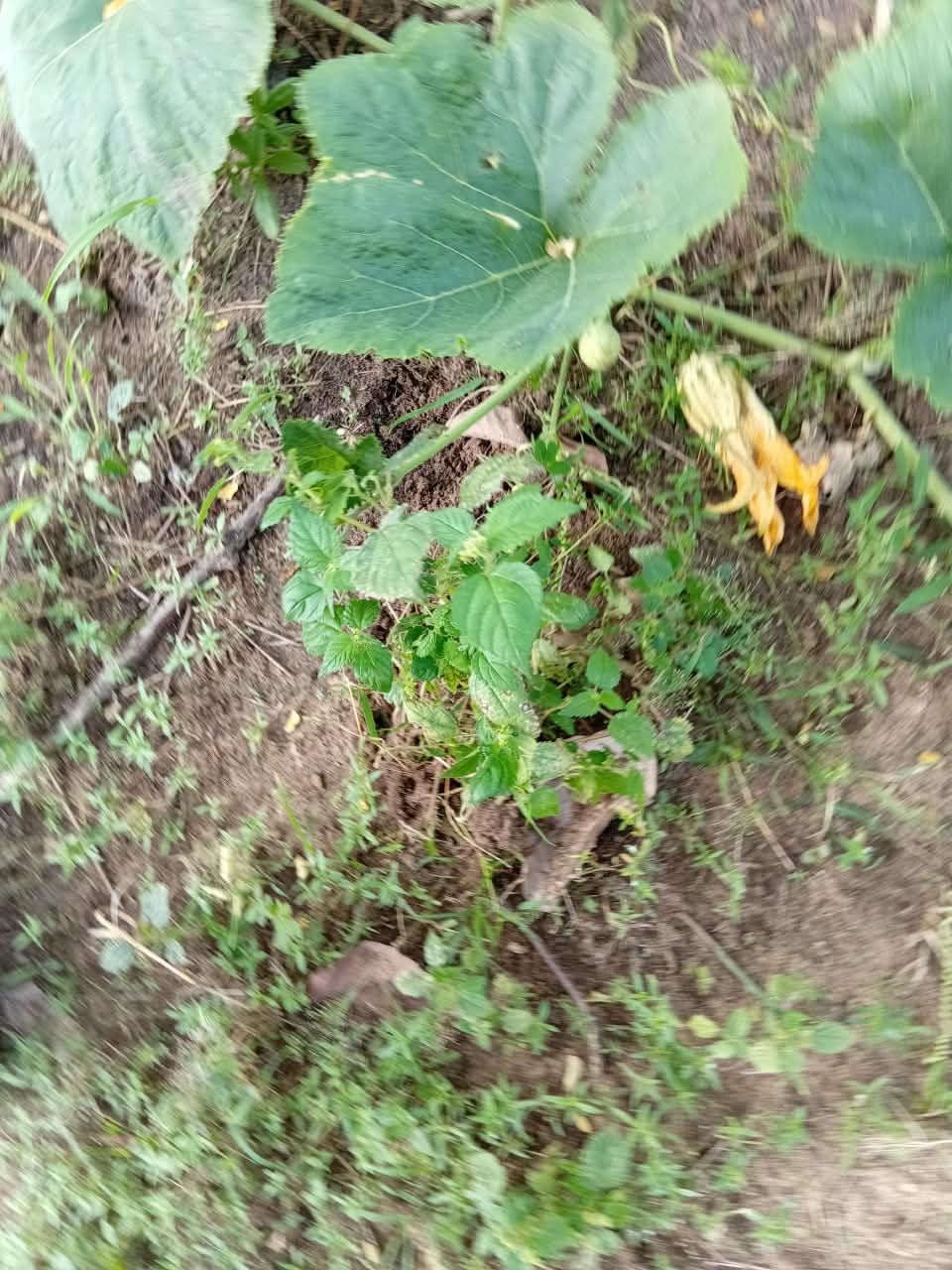
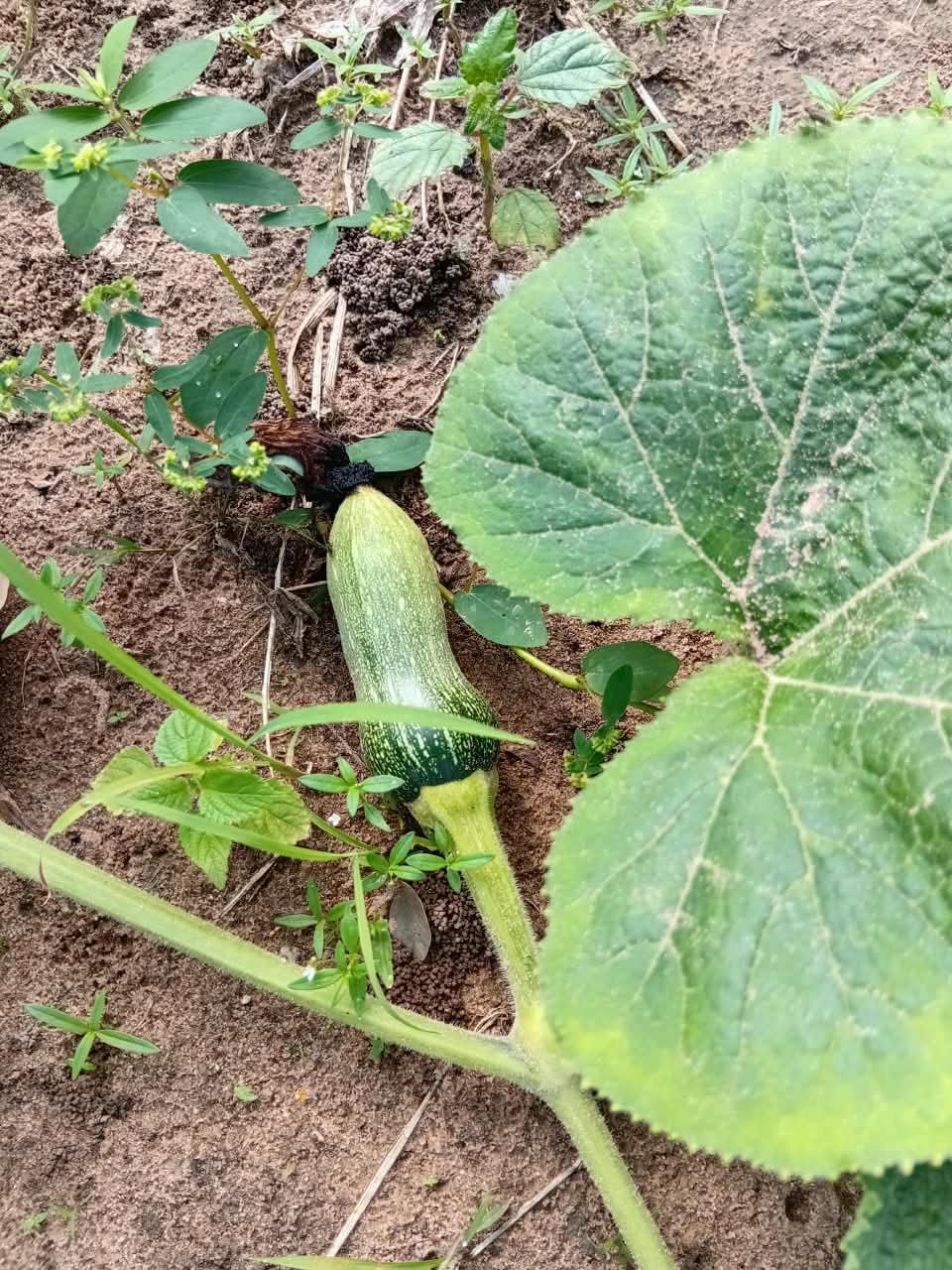
And then came the evidence that really caught our attention: fruit.
The vines were not merely surviving in the roof of the greenhouse. They were reproducing there. We had inadvertently created the beginnings of a vertical egusi production system.
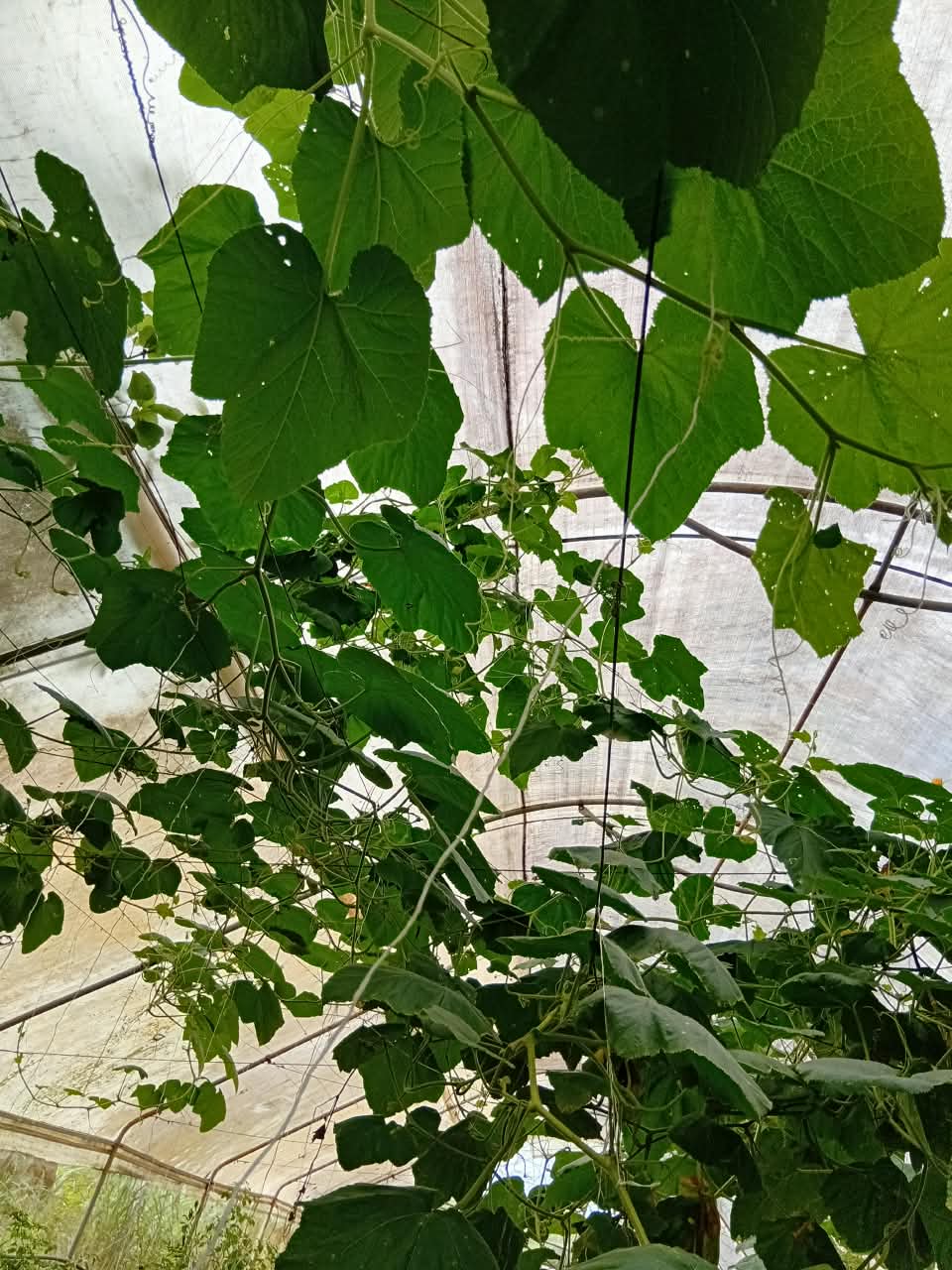
We were measuring the farm in square metres. The egusi was measuring it in cubic metres.
That sentence captures the lesson.
Farmers normally measure land horizontally: one acre, five acres, one hectare, a 10 × 20 metre greenhouse. But above every square metre of ground is another resource that frequently produces nothing: space.
A sprawling vine growing conventionally occupies valuable horizontal area. A climbing vine has another option. It can go upwards.
That does not magically create more sunlight, water or nutrients. Nor does it mean that every crop should be grown vertically. Excessive foliage can shade crops underneath, reduce airflow and potentially encourage disease.
But it changes the question. Instead of asking only “How much land do we have?”, perhaps we should also ask: “How much productive space do we have?”
What exactly is Igbo egusi?
Here we need to be careful.
“Egusi” is not a single universally defined botanical crop name. Across West Africa, the term is applied to cucurbits cultivated particularly for their edible seeds, and local names and landraces do not always correspond neatly with commercial or botanical naming systems.
For that reason, we are not assigning this particular Excell Africa plant a definitive species merely from photographs. We are documenting it by the name under which we know the crop: Igbo egusi.
African agriculture contains generations of crop knowledge that can easily become invisible when indigenous varieties are discussed only through imported seed catalogues and classifications. Our first responsibility is therefore to document what we actually have.
Perhaps African vertical farming doesn’t have to begin with expensive machinery
Mention “vertical farming” and a familiar image often appears: warehouses, stacked growing racks, hydroponics, pumps, LED lights, sensors, climate control and computers.
Those systems have legitimate applications. But the principle of vertical farming is much simpler than any particular commercial technology. It is about making productive use of vertical space.
Our Igbo egusi has demonstrated an extraordinarily inexpensive mechanism for doing precisely that.
No electric motor lifted the vine. No pump pushed it upwards. No computer instructed the tendrils where to attach.
The biological machinery came inside the seed. We supplied the environment. The plant supplied the engineering.
Now the accident becomes an experiment
This is where farming becomes research.
We should not conclude from a few successful fruits that vertical Igbo egusi farming is automatically superior. We do not know that yet. So we test it.
One group can be allowed to trail conventionally along the ground. Another can be deliberately trained onto a simple trellis.
Then we measure: fruit numbers, fruit weight, dry seed yield, seed yield per plant, seed yield per square metre, labour, pest and disease incidence, water requirements and ultimately profit.
Because a farming innovation that looks wonderful in a photograph but costs the farmer more than it produces is not much of an innovation.
Then comes the really interesting experiment
What happens underneath?
This connects directly with an idea we have already been exploring at Excell Africa Farms: our Pepper–Melon Greenhouse Trial.
Imagine deliberately training the egusi into the upper canopy while peppers—or another compatible crop—continue producing underneath.
Now the economic question becomes much more interesting. We are no longer asking, “How much egusi can one square metre produce?” We ask: “What total value can we produce from the cubic growing space above that square metre?”
Perhaps peppers below. Egusi above. Maybe something else around the margins.
That begins to resemble three-dimensional biological farm design. And potentially it can be constructed from little more than poles, wire, netting or string.
The farm is our laboratory
There will be problems. The canopy may become too dense. The crop underneath may become excessively shaded. Heavy fruits may need individual support. Pollination inside the greenhouse may need managing. The photographs already show some leaf damage that we should monitor rather than automatically treat.
And the experiment may fail.
That last possibility matters. At Excell Africa Farms, failure should not automatically mean wasted effort. A properly documented failure becomes knowledge.
We record what happened. We change something. We try again. And if something works, we measure it before recommending it to anybody else.
That is the difference between showing something interesting on social media and developing a farming system.
This is what we mean when we say the farm can become the university
Imagine an agricultural student standing underneath these vines. There is an entire lesson above their head.
Plant morphology. Tendrils. Flowering. Pollination. Fruit development. Canopy management. Intercropping. Pest management. Greenhouse production. Experimental design. Yield measurement. Agricultural economics.
And now AI adds another dimension. We can photograph the experiment, record measurements, analyse results, compare them with published agricultural research, document failures, publish discoveries and allow another farmer hundreds or thousands of kilometres away to repeat what worked.
The distinction between farm, laboratory, classroom and publishing house begins to disappear.
Technology does not always have a plug
At Excell Africa Farms we are interested in modern technology. We use solar energy. We experiment with greenhouses and hydroponics. We explore processing and preservation. We use artificial intelligence.
But technology does not always mean expensive machinery.
A trellis is technology. Crop selection is technology. Intercropping is technology. Seed saving is technology. Knowing how and when to pollinate a flower is technology.
And sometimes one of the most powerful technologies available to a farmer is simply observation.
Before spending money trying to force nature to behave differently, perhaps we should occasionally ask: What is nature already trying to do?
The Igbo egusi answered before we asked
We did not start this with a research paper. We planted a crop. It grew. It climbed. It flowered. It produced fruit. And somebody looked upwards and noticed.
That observation now gives us a question worth testing: Can Igbo egusi become part of an inexpensive, productive vertical cropping system suitable for African farms?
We do not yet know the answer. That is exactly why we are going to experiment.
Ground versus trellis. Egusi alone versus egusi with another crop underneath. Fruit yield. Seed yield. Labour. Space. Cost. Revenue. And, eventually, profitability.
The plant has already completed Stage One.
It built the prototype.
Our job now is to measure it.
From Soil to Significance
Excell Africa Farms
We grow. We observe. We experiment. We document. We learn. And where something works, we ask whether another farmer can reproduce it affordably.
Because sometimes the most valuable harvest from a farm isn’t the crop.
It is the knowledge.