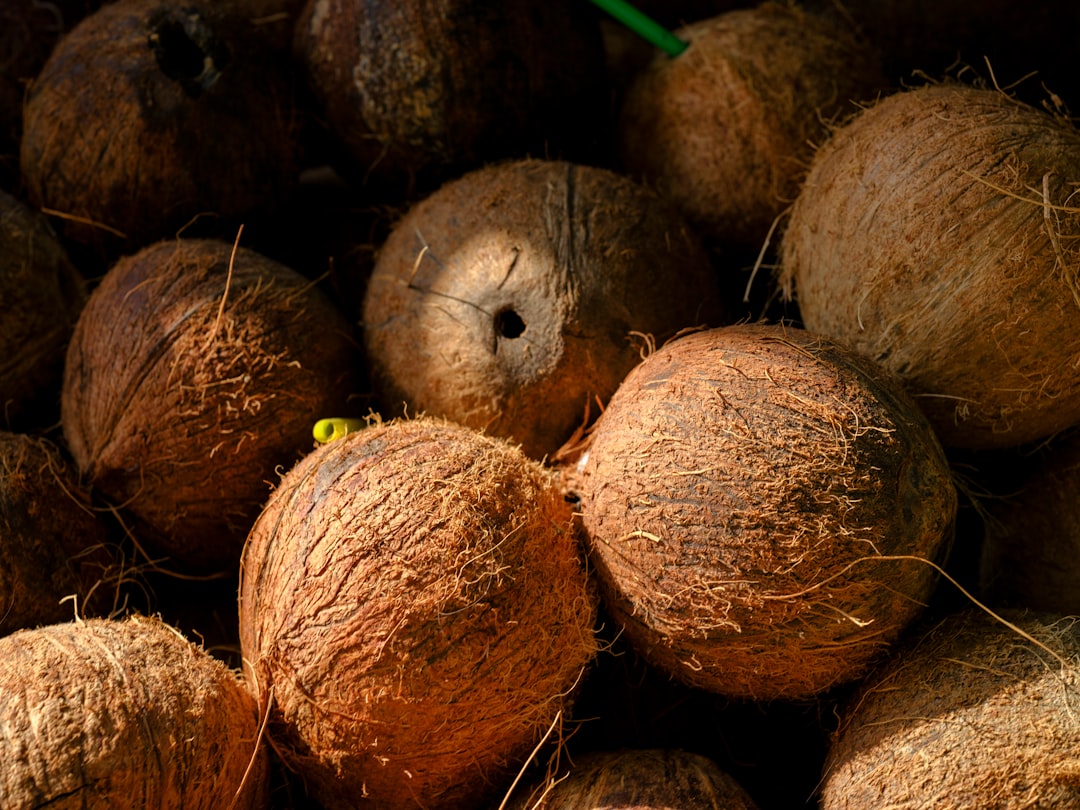
We open a coconut for the water. We use the flesh for food, oil and other products. Then, in many places, we throw the husk away.
But what if the part we discard is itself a raw material?
That is the JustLearn question: what are we walking past?
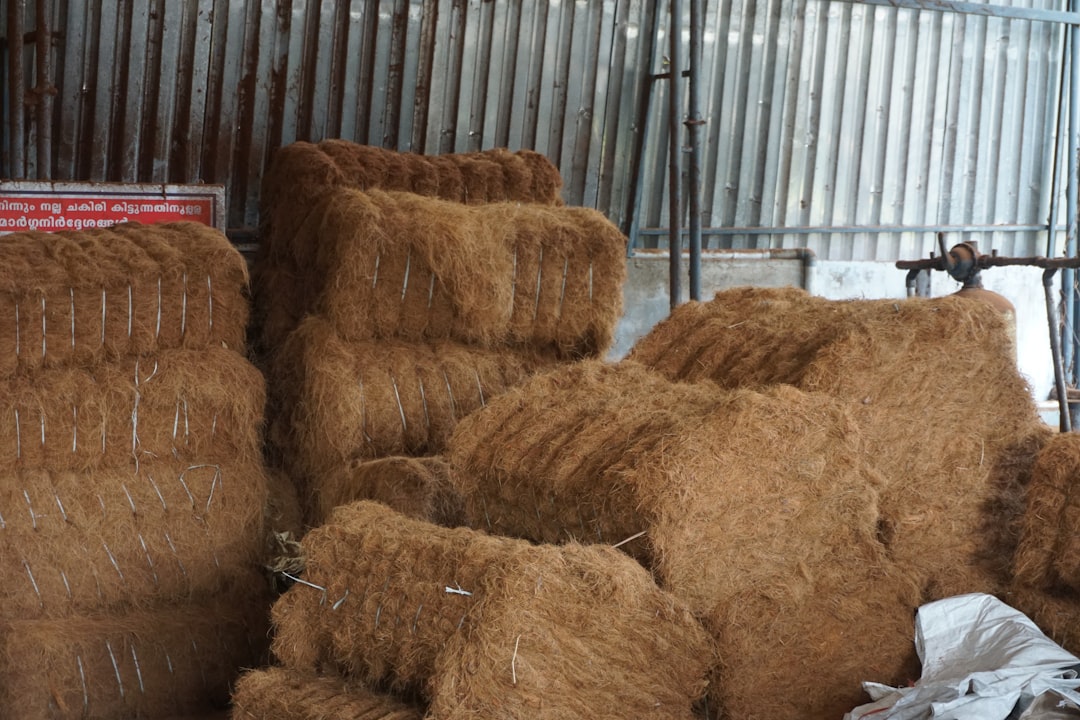
Coconut husk can be processed into coir fibre and coir pith. The fine, spongy coir pith is commonly processed and sold as cocopeat—a growing-medium ingredient used in nurseries, greenhouse production, container growing and many soilless systems.
1. The Coconut Husk We Keep Throwing Away
Agricultural opportunity does not always begin with finding a new crop. Sometimes it begins by looking again at a material we already have and asking whether it can become something more valuable.
Coconut processing creates a bulky husk. Where there is no organised use for it, that husk can become a disposal problem. Yet the husk contains tough coir fibres surrounded by finer pithy material. Separating and preparing those fractions can turn a waste stream into useful agricultural inputs and industrial raw materials.
This is important for African agriculture because value addition is not only about processing the crop we harvest. It is also about extracting more value from what remains after the obvious product has been taken.
2. What Exactly Is Cocopeat?
Cocopeat is the fine material associated with coconut coir after the longer fibres are separated. Despite the name, it is not peat dug from the ground.
Its attraction as a growing-medium component comes from its ability to retain considerable moisture while still contributing useful pore space when properly processed and blended. That makes it useful for seedling trays, nursery bags, pots, greenhouse systems and various soilless-growing applications.
However, cocopeat is not automatically ready for plants simply because a coconut husk has been shredded. Quality matters. Depending on the raw material and processing method, the material may need washing and appropriate treatment to reduce unwanted salts. Serious growers should check properties such as pH and electrical conductivity (EC) rather than assuming every batch is suitable.
3. How Coconut Husk Becomes Cocopeat
At small scale, the process can be understood as a simple production chain.
Collect and clean the husks. Remove soil, stones, plastics and other contamination.
Break down the husk. A suitable shredder, crusher or decortication system separates and reduces the material. Traditional retting methods exist for fibre production, but prolonged soaking is not automatically required for every modern cocopeat process.
Separate the fractions. Longer coir fibres are removed from the finer pith. The fibre itself has potential uses, so it should not automatically be treated as another waste product.
Wash or treat where necessary. Cocopeat intended for horticulture needs appropriate quality control. Washing can reduce soluble salts; commercial horticultural coco products may also be specially buffered depending on their intended use.
Dry and screen. The material is dried to a suitable level and screened to obtain the required particle size and consistency.
Test before use. Particularly for seedlings, hydroponics and other sensitive crops, pH and EC testing should be part of the process.
Package or formulate. Cocopeat can be sold loose, compressed into blocks with appropriate equipment, or incorporated into carefully designed growing-media blends.
4. One Waste Stream, Several Products
This is where the business becomes more interesting.
The entrepreneur should not look at a coconut husk and see only cocopeat. Processing can potentially create several product streams: coir fibre, coir pith, coarser coconut chips and formulated horticultural substrates.
That changes the question from, “How much can I sell cocopeat for?” to, “How much value can I recover from each tonne of husk?”
A farm or nursery could also experiment with growing-media formulations using cocopeat alongside properly matured compost and other locally available components. But formulations should be tested rather than copied blindly: different crops and production systems need different physical and chemical properties.
This is the difference between merely making a product and building an agricultural enterprise.
5. Could We Do This at Excell Africa Farms?
For us at Excell Africa Farms, this is exactly the kind of idea worth investigating—but investigation must come before investment.
The first stage would be a small pilot. We would identify reliable sources of coconut husks, establish the real delivered cost of the raw material, test simple shredding and separation methods, measure how much usable fibre and pith we recover, and determine the water, labour, drying-space and equipment requirements.
Then comes the part that matters most: grow something in it.
We can compare seedlings grown in our processed cocopeat-based medium against seedlings grown in our existing nursery medium. We can measure water retention, drainage, germination, root development and plant performance while monitoring pH and EC.
Only after the technical trial should we build the economics: cost per kilogram, labour requirement, packaging, transport, likely customers and realistic selling price.
If the numbers work, a discarded coconut husk has become something much bigger: an input for our own farm, a potential product for other growers and another demonstration of circular agriculture in practice.
From Waste to Enterprise
The lesson is bigger than cocopeat.
Across African farms and markets, we walk past husks, stalks, leaves, manure, processing residues and other materials every day. Some genuinely are waste. Others are resources whose next use we have not yet learned.
Agricultural waste often remains waste only until somebody learns what it can become.
That is why we JustLearn.
Want to go beyond reading? Follow the practical learning programmes from Sharper Minds Academy and the real-farm experiments at Excell Africa Farms, where we explore agriculture not simply as production, but as a platform for enterprise, processing, technology and lifelong learning.